A few years ago, I sat on a porch in Vermont watching a thunderstorm roll over a field of black-eyed Susans. The flowers bent sideways in the wind, snapped back, bent again. I hadn’t written anything in weeks – the kind of dry spell where you start wondering if you’ve ever had an original thought. But something about those stubborn golden heads refusing to stay down made me open a notebook. Forty minutes later, I had a rough draft of a poem I still like.
That moment taught me something I keep relearning: flowers are not just decorative subjects for greeting-card verse. They’re creative engines – packed with sensory data, symbolic weight, structural elegance, and emotional complexity. If you know how to approach them, they can unlock writing that surprises even you.
Why flowers work as creative catalysts – beyond the obvious
Most advice about flowers and writing stops at “describe what you see.” That’s a start, but it barely scratches the surface. Flowers activate multiple creative pathways at once, and understanding why can help you use them more deliberately.
They engage all five senses simultaneously
Pick up a sprig of lavender. You’re not just seeing purple – you’re feeling the woody stem, smelling that sharp herbal sweetness, hearing the buzz of whatever bee you just disturbed, maybe even tasting the floral dust on your lips. Very few objects in daily life trigger all five senses this quickly. For a writer, that’s gold. Sensory detail is the difference between flat prose and writing that puts readers inside an experience.
Try this: hold an actual flower (not a photo – the real thing) and spend two minutes cataloging what each sense picks up. You’ll be surprised how many unexpected descriptors emerge. A rose petal feels like the inside of a wrist. A marigold smells like copper and pepper. These strange, honest comparisons are where original language lives.
They carry centuries of symbolic meaning
During the Victorian era, floriography – the language of flowers – allowed people to communicate messages they couldn’t speak aloud. A yellow carnation meant disappointment. A striped carnation was a refusal. Red chrysanthemums declared love; white ones signified truth.
This symbolic vocabulary gives writers a ready-made subtext layer. You don’t have to explain that your character is grieving if you place white lilies on the kitchen table. You don’t need to spell out new beginnings if your narrator notices crocuses pushing through late snow. The flower does the emotional work, and the reader feels it without being told.

Four approaches that go deeper than “describe a rose”
1. Use a flower’s life cycle as a narrative structure
A flower’s arc – from seed to bud to bloom to wilt to seed again – mirrors every good story. It has anticipation, a climax, a decline, and the promise of renewal. Try mapping a personal essay or poem onto this cycle. Start with something dormant (an unspoken feeling, a relationship before it began), move through the opening (the first conversation, the first crack in the surface), reach full bloom (the peak moment), and then let it fade honestly.
Sylvia Plath did this brilliantly in “Poppies in July,” using the flower’s brief, intense bloom as a framework for examining pain and numbness. The poppy didn’t just decorate the poem – it organized the emotional logic.
2. Let scent trigger memoir
Smell is the sense most tightly wired to memory – neuroscience confirms this. The olfactory bulb connects directly to the amygdala and hippocampus, the brain regions handling emotion and memory. This is why the scent of lilacs can teleport you to your grandmother’s yard faster than any photograph.
For personal narrative and memoir writing, this is incredibly practical. Keep a small bouquet on your desk – or even a scented candle that approximates jasmine, gardenia, or honeysuckle. As you write, let the scent pull associations forward. Don’t censor them. The memories that arrive sideways, triggered by fragrance rather than deliberate recall, tend to be the most vivid and emotionally true.
3. Study the flower’s physical architecture
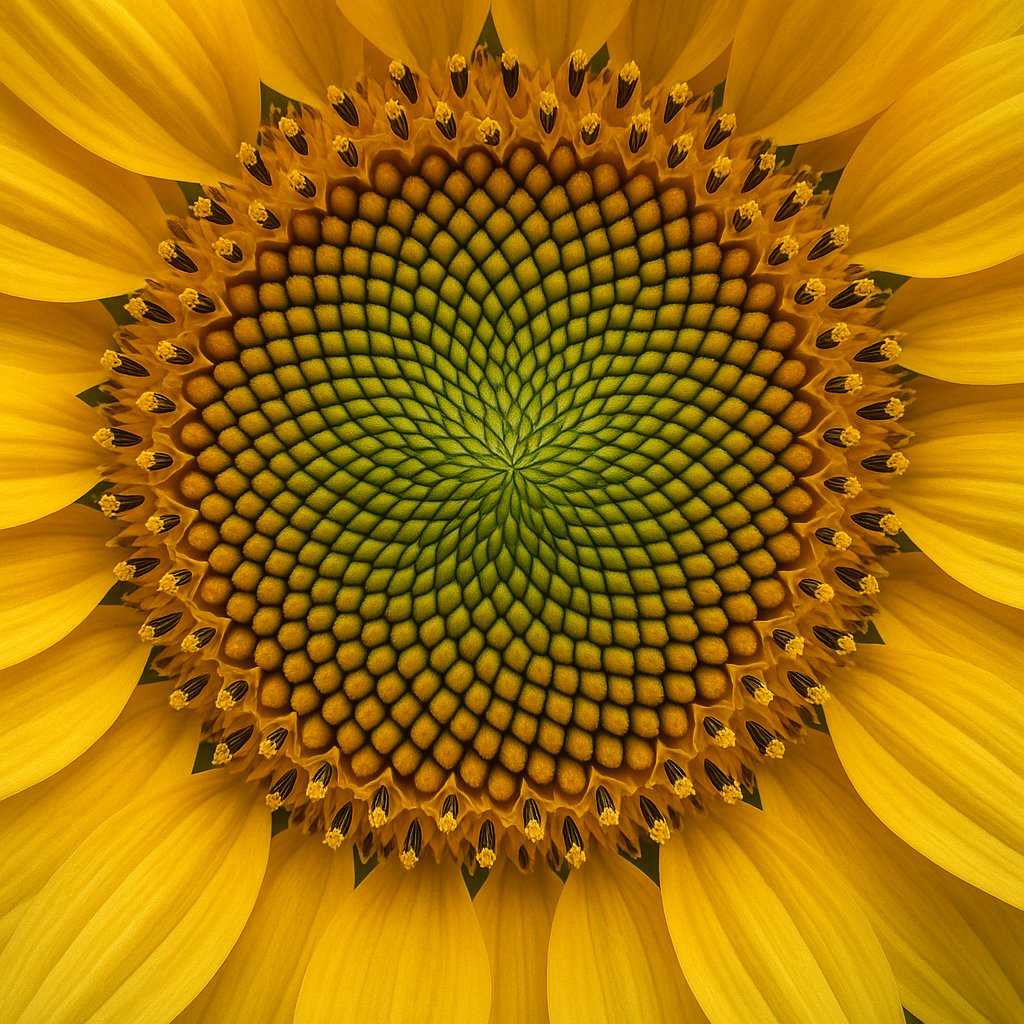
Most people glance at a sunflower and think “big yellow thing.” But look closer. A sunflower head contains hundreds of tiny florets arranged in intersecting spirals that follow the Fibonacci sequence – 34 spirals one way, 55 the other. That mathematical precision hiding inside apparent wildness is, honestly, a writing lesson on its own.
Studying how a flower is built trains the observational muscles that every writer needs. Examine how an iris unfolds in three layers. Notice that a snapdragon’s petals form a mouth that opens when you squeeze the sides. Look at how morning glory vines spiral counterclockwise – always counterclockwise. These details matter because precise observation is the foundation of original description. You can’t write something fresh about a flower if you’ve never really looked at one.
4. Write against the cliché
Here’s where experienced writers separate themselves from beginners. Flowers have been so heavily romanticized in literature that they come pre-loaded with clichés. “A rose by any other name,” “pushing up daisies,” “bloom where you’re planted” – these phrases are dead on the page.
The trick is to use flowers in ways that defy expectation:
- Write about an ugly flower – the corpse flower that smells like rotting meat, or the aggressive spread of kudzu blossoms
- Give a flower a voice and let it complain about being picked, arranged, and thrown away after a dinner party
- Describe a bouquet from the perspective of someone who hates the person who sent it
- Use a wilting flower not as a symbol of death but of relief – finally letting go of the performance of being beautiful
Mary Oliver, one of America’s most celebrated nature poets, succeeded not because she wrote about flowers in predictable ways but because she brought a fierce, almost unsettling attention to them. Her daffodils weren’t sweet – they were “reckless.” Her poppies were “fire.” That tension between the softness we expect and the intensity she delivered is what made her work unforgettable.
A quick exercise you can try right now
Go outside – or to a grocery store, a farmer’s market, a neighbor’s garden – and choose one flower you wouldn’t normally notice. Not the showiest bloom, but the overlooked one. The weed flower growing through a sidewalk crack. The half-dead arrangement on a restaurant table.
Now write for ten minutes using these constraints:
- Describe it using only comparisons to things that have nothing to do with nature (machinery, food, fabric, architecture)
- Give it an emotion that seems wrong for its appearance – an aggressive daisy, a shy thorned cactus bloom
- End with a single sentence connecting this flower to a specific moment in your own life
This exercise works because it forces you past the first, obvious layer of description and into territory that feels genuinely yours. I’ve used it in workshops, and the results consistently surprise people – including writers who swore they had “nothing to say about flowers.”
The poets who got it right – and what they did differently
If you want to study how flowers fuel powerful writing, start with these names:
- William Carlos Williams – his poem “Queen-Anne’s-Lace” turns a common roadside weed into an exploration of desire using nothing but precise visual description
- Louise Glück – her collection “The Wild Iris” gives voice to garden flowers, letting them speak about existence, suffering, and faith. It won the Pulitzer Prize
- Ross Gay – in “Catalog of Unabashed Gratitude,” he writes about flowers with a joy so specific and physical it becomes contagious
- Emily Dickinson – she was a serious botanist who pressed over 400 specimens into an herbarium. Her flower poems carry scientific accuracy alongside emotional depth
What these writers share isn’t a love of prettiness – it’s a commitment to looking honestly and describing precisely. They treat flowers as complex subjects worthy of real attention, not as props for predetermined feelings.
Where this takes you
Flowers won’t write your poems for you. But they offer something that’s increasingly rare in a screen-saturated life: a reason to slow down and pay close attention to a physical object that changes, smells, decays, and regenerates. That act of sustained attention is, at its core, the same act as writing well.
Start small. One flower. One notebook. Ten honest minutes. See what surfaces. If the first attempt feels clumsy or forced, that’s normal – keep going. The clichés will burn off, and underneath them, you’ll find images and associations that belong only to you. That’s where real creative writing begins.
Leave a Reply
You must be logged in to post a comment.