Why peonies bloom for such a short time and how to enjoy them for longer

Every May, I watch the same small drama unfold in my garden. The peony buds swell like green golf balls, then crack open in a single warm weekend, and I’m standing there with a coffee thinking: this is the best week of the year. Then a thunderstorm rolls through, and ten days later the petals are scattered across the mulch. If you’ve ever felt cheated by how fast peonies come and go, you’re not imagining it. The show really is short. But there are good biological reasons for that, and a surprising number of ways to stretch it out.

What’s happening inside a peony flower

A peony bloom is a big investment. Each flower can hold dozens of petals, and the plant builds them from energy stored in thick tuberous roots. Those roots are a savings account. The plant spends it in a quick burst in late spring, and the main goal is not to look pretty for us. It’s to attract pollinators and set seed.

Once a flower has been open for a few days and pollen has been shed, the plant has little reason to keep the petals. Ethylene, a plant hormone, rises as the flower ages, and the petals begin to drop. Heat speeds this up. Warm temperatures raise a plant’s metabolic rate, so everything runs faster: opening, aging, shattering.

Most garden peonies (Paeonia lactiflora, the classic herbaceous type) bloom for roughly 7 to 10 days per flower. A whole plant might stay in color for 10 to 14 days, depending on the weather. Double forms like ‘Sarah Bernhardt’ are especially vulnerable, because their heavy heads soak up rain and bend to the ground.

Weather: the biggest wild card

In most of the U.S., peonies bloom between late April in the South and late June in northern states and the Mountain West. They need winter chilling (generally 500 to 1,000 hours below 40°F), which is why they struggle in USDA zones 8 and above and thrive in zones 3 to 7.

Here’s the catch. A sudden 85°F day in the middle of bloom can cut the display in half. Heavy rain, wind, and late frosts do similar damage. You can’t control the sky, but you can soften its effects:

  • Plant in a spot with afternoon shade. Full sun is still best for flowering, but a site that gets relief after 3 p.m. keeps petals fresher in hot spells.
  • Shelter from wind. A fence, hedge, or the east side of a building makes a real difference.
  • Stake early. Put grow-through hoops or peony rings in place when shoots are about 6 inches tall. Trying to add support once buds are heavy usually means broken stems.
  • Cover during storms. An old bedsheet or a floating row cover, draped lightly over stakes the evening before a hard rain, can save a bloom week.

Plant a longer season, not just a longer bloom

This is the trick I wish I’d learned earlier. Peonies come in different bloom-time groups, and mixing them can stretch your season from two weeks to six.
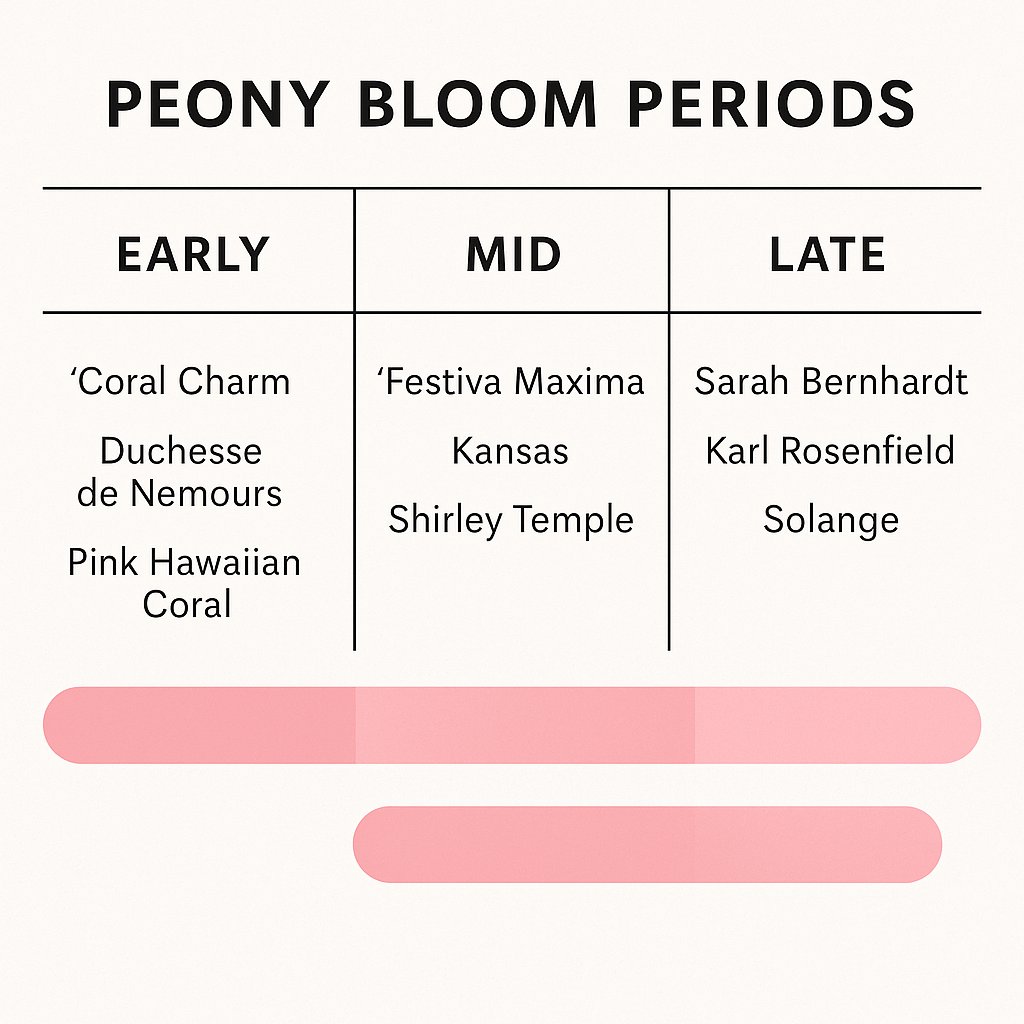
timeline chart of early, mid, and late peony bloom periods with varieties

Early, mid, and late varieties

  • Early: Fernleaf peony (P. tenuifolia), ‘Red Charm’ and many hybrid types, usually opening 1 to 2 weeks before the classics.
  • Mid-season: ‘Sarah Bernhardt’, ‘Festiva Maxima’, ‘Karl Rosenfield’. These make up most of what you see in neighborhood gardens.
  • Late: ‘Bowl of Beauty’ and ‘Duchesse de Nemours’ often come 1 to 2 weeks after mid-season.

Don’t skip the other peony types

Itoh (intersectional) peonies, such as ‘Bartzella’, bloom after the herbaceous ones and can produce 50 or more flowers on a mature plant over several weeks. Tree peonies (P. suffruticosa) open earlier, often in late April or May, on woody stems. Combine all three groups and you can have peonies for a month and a half in many climates.

Make cut flowers last, too

Cutting is the most underrated way to enjoy peonies longer. Flowers in a vase are protected from rain and heat, and they keep opening indoors for days.

The “marshmallow stage”

Cut buds when they feel soft like a marshmallow when gently squeezed, and show a little color. Hard, tight buds (“golf balls”) may never open. Fully open flowers have only a few days left.

Steps for a vase that lasts

  1. Cut in the cool of early morning, leaving at least two sets of leaves on the plant so it can keep feeding its roots.
  2. Strip most of the foliage from the stems and recut at an angle.
  3. Place in lukewarm water with a little flower food.
  4. Keep the vase away from fruit bowls (ripening fruit gives off ethylene) and direct sun.
  5. Change the water every two days and recut an inch off the stems.

Want blooms later? Cut buds at the marshmallow stage, wrap them dry in paper, lay them in a box, and store in a refrigerator for up to three weeks. Florists do this all the time to extend peony season well into summer. Just be sure the fridge is cold (around 34 to 36°F) and free of fruit.

Care that pays off next spring

The bloom you get this year depends partly on how you treated the plant last year. A few habits help:

  • Plant crowns with the pink “eyes” only 1 to 2 inches below the soil surface. Planting too deep is the classic reason for leafy plants with no flowers.
  • Skip heavy nitrogen fertilizer. A light dose of bone meal or a balanced, low-nitrogen feed in early spring is enough.
  • Leave the foliage alone after flowering until it yellows in fall. The leaves recharge the roots.
  • Be patient. A new division can take three years to bloom well, but peonies can live for decades.

A short season is part of the charm

Peonies will never bloom like zinnias, which keep going until frost. Their brief, extravagant moment is built into their biology. But with a little planning – a mix of early and late varieties, some support and shelter, and a few buds cut for the kitchen table – you can easily turn two weeks into six. Next spring, try noting in a garden journal which plants opened when. After a year or two, you’ll have your own bloom calendar, and that’s the best guide for deciding what to add next.
Uncategorized

What flowers mean in different countries: cultural rules to know before you send a bouquet abroad

A friend of mine once sent a huge bouquet of white chrysanthemums to a colleague in Tokyo after she got a promotion. The gesture was kind. The flowers were a disaster. In Japan, white chrysanthemums are closely tied to funerals and grave offerings, and the colleague spent a few awkward minutes wondering whether it was a joke.

Flowers feel universal, but their meanings are not. A rose in Paris, a marigold in Mexico City and a lily in Warsaw each carry a different message. If you’re in the US and want to get it right for someone overseas, a little cultural homework goes a long way.

Why the same flower says different things

Flower symbolism grows out of religion, history and local ritual. Chrysanthemums bloom around All Saints’ Day in Europe, so in France, Italy, Belgium and Poland they became cemetery flowers. In East Asia they’re linked to autumn, memorial rites and, in Japan, the imperial family. Marigolds are bright and cheerful to an American eye, but in Mexico they guide spirits home during Día de Muertos.

Color adds another layer. White means purity at a US wedding, but it’s the mourning color in much of East Asia and parts of South Asia. Yellow suggests friendship in the US, yet in Russia and several neighboring countries it has long been read as a sign of parting or betrayal. Purple is tied to mourning in Brazil and some other Latin American countries.

A quick reference by region

Region Safe choices Think twice
Japan Seasonal mixed bouquets, peonies, orchids White chrysanthemums, camellias for the sick, potted plants for hospitals, bunches of 4 or 9
China Red or pink peonies, orchids, lilies for celebrations White or yellow chrysanthemums, sets of 4
France, Italy, Spain Seasonal bouquets, roses for romance Chrysanthemums, and carnations in some contexts
Russia, Ukraine, Poland Odd-numbered bouquets in mixed colors Even numbers, yellow flowers for romance
Germany, Netherlands Tulips, spring mixes, unfussy hand-tied bouquets Red roses for someone you don’t know well, because the signal is romantic
Mexico, Latin America Roses, gerberas, dahlias, bright mixes Marigolds outside the Day of the Dead, yellow or purple flowers as a gift
India Marigolds and jasmine for festivals, bright mixed bouquets All-white arrangements for celebrations

Treat this as a starting point, not a rulebook. Customs vary between cities, generations and families.

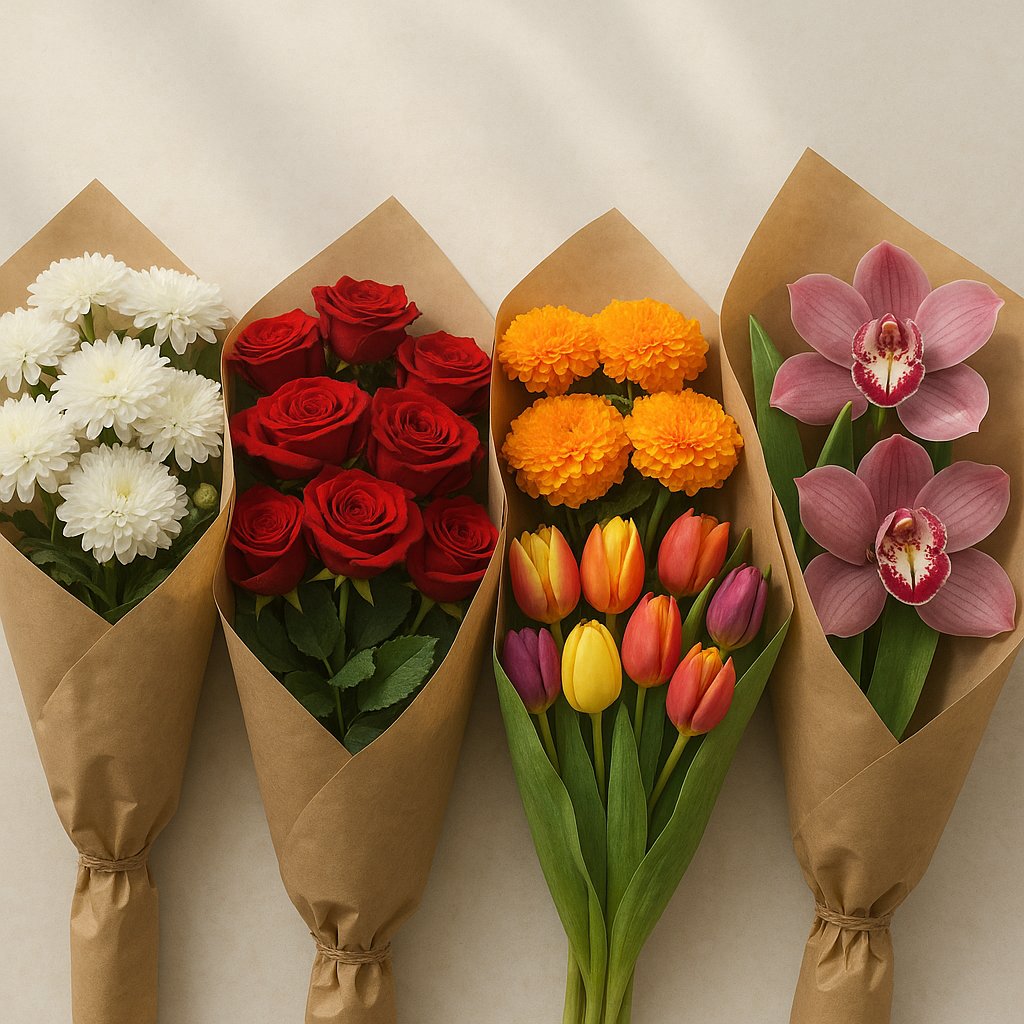
different bouquets side by side: white chrysanthemums, red roses, marigolds, tulips and orchids

Numbers matter more than you’d expect

This is the detail Americans miss most often. In Russia, Ukraine, Belarus and the Baltic states, living people get odd numbers of flowers (3, 5, 7), and even numbers are kept for funerals. A dozen roses, the standard US gesture, can land badly there. In Japan and China, four sounds like the word for death, and in Japan nine can sound like “suffering.” Eight, by contrast, is lucky in Chinese culture.

A safe habit: before you order, ask how many stems are in the arrangement. If there’s any doubt, go for a mixed bouquet that’s clearly “a lot of flowers” rather than a counted set.

Roses, lilies and the romance problem

Red roses mean romance almost everywhere, and that’s exactly the trouble. Sending them to a coworker in Berlin, a host in Madrid or a friend’s mother in Seoul can suggest more than you intended. Pastel roses, tulips, freesias or a seasonal mix send a warmer, safer message.

Lilies are another gray area. In Italy and several other European countries they’re strongly tied to funerals. In parts of Latin America and the Middle East their scent is considered heavy. Meanwhile, the Netherlands and Turkey treat tulips as a point of national pride, so those rarely miss.

A note on hospital and sympathy etiquette

  • In Japan, avoid potted plants for a patient. Roots suggest illness that “takes root.”
  • In many countries, hospitals restrict strongly scented flowers, so ask first.
  • For sympathy, check the faith and family tradition. Some Jewish and Muslim families prefer donations or food over flowers.
  • In Hindu households, avoid sending anything made of leather or with a leather card holder. Plain paper is better.

Practical steps before you hit “order”

Culture is half the puzzle. The other half is logistics. Some countries, including Australia and New Zealand, have strict biosecurity rules, and cut flowers shipped across borders can face inspection or restrictions. That is why most reputable services that send flowers internationally work through local florists who source stems in the destination country rather than shipping a box from abroad. It keeps the flowers fresh and usually avoids customs trouble.

Here’s the checklist I use myself:

  1. Identify the occasion. Birthday, wedding, funeral and business thank-you each call for different choices.
  2. Ask a local. A quick message to a friend or relative in that country beats any guide.
  3. Check colors and stem counts. Especially for Eastern Europe and East Asia.
  4. Write the card in the local language if you can, or at least have it translated properly.
  5. Mind the date. Delivery during local holidays such as All Saints’ Day, Obon or Lunar New Year can be delayed, and some flowers carry a special meaning at those times.

When in doubt, keep it simple

Nobody expects you to memorize every custom. What people notice is the effort. A seasonal bouquet in soft, mixed colors, a thoughtful card and a quick question to someone local will almost always be received with warmth, even if you miss a nuance.

If this topic interests you, look into the flower traditions of one country you often send gifts to. Understanding a single holiday, like Mexico’s Día de Muertos or Japan’s hanami season, tends to teach you more about local flower culture than any list can.

Uncategorized

Long-distance love: flowers that say ‘I miss you’ when you can’t be there

My friend Hannah spent eleven months in Singapore while her partner stayed in Leeds. A seven-hour time difference meant most of their conversations happened at odd hours, half-asleep. What she remembers most isn’t the calls, though. It’s the small bunch of sweet peas that turned up on her windowsill one Tuesday, with a card saying only “Smells like home.”

Flowers can’t close the distance, but they can do something texts and emojis struggle with. They take up physical space in the other person’s day, and they change the room. Here’s how to make them say “I miss you” clearly and thoughtfully, rather than just “I remembered.”

Why flowers work when words start to feel thin

Couples who live apart tend to describe the same problem. The conversation becomes logistics: schedules, flight prices, “how was your day?” on repeat. A bouquet breaks that pattern. It’s unexpected, it’s tangible, and it gives the recipient something to look at, smell and tend to.

There’s also the slow-burn effect. A message is read and gone in seconds, but a bunch of flowers lasts a week or two. Every time your partner walks past, there’s a small reminder that somebody thought about them in a particular moment.

Choosing flowers that actually carry the message

You don’t need to memorise Victorian floriography, and meanings vary between sources anyway. Still, a few flowers have associations that are widely recognised and pair well with “I miss you.”

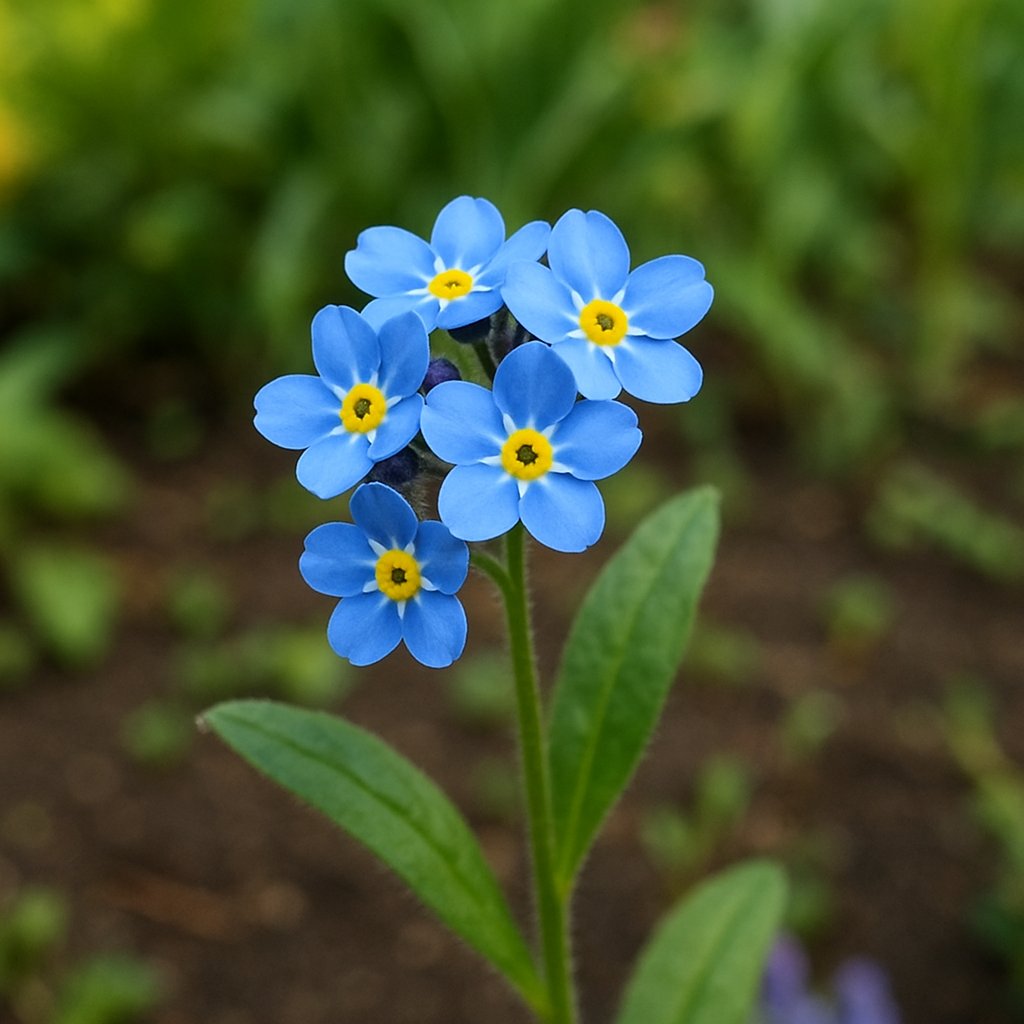
  • Forget-me-nots – the name does the work. Lovely in a small posy, especially in spring.
  • Sweet peas – traditionally linked to fond farewells and “thank you for a lovely time.” Scented and seasonal, usually May to August in the UK.
  • Peonies – romance and affection, but short-lived in season (roughly late spring to early summer).
  • Tulips – often read as declarations of deep love, and a good-value choice from winter into spring.
  • Alstroemeria – associated with devotion and lasting bonds, and one of the longest-lasting cut flowers.
  • Lavender – devotion and calm. Useful for partners who are stressed or sleeping badly.

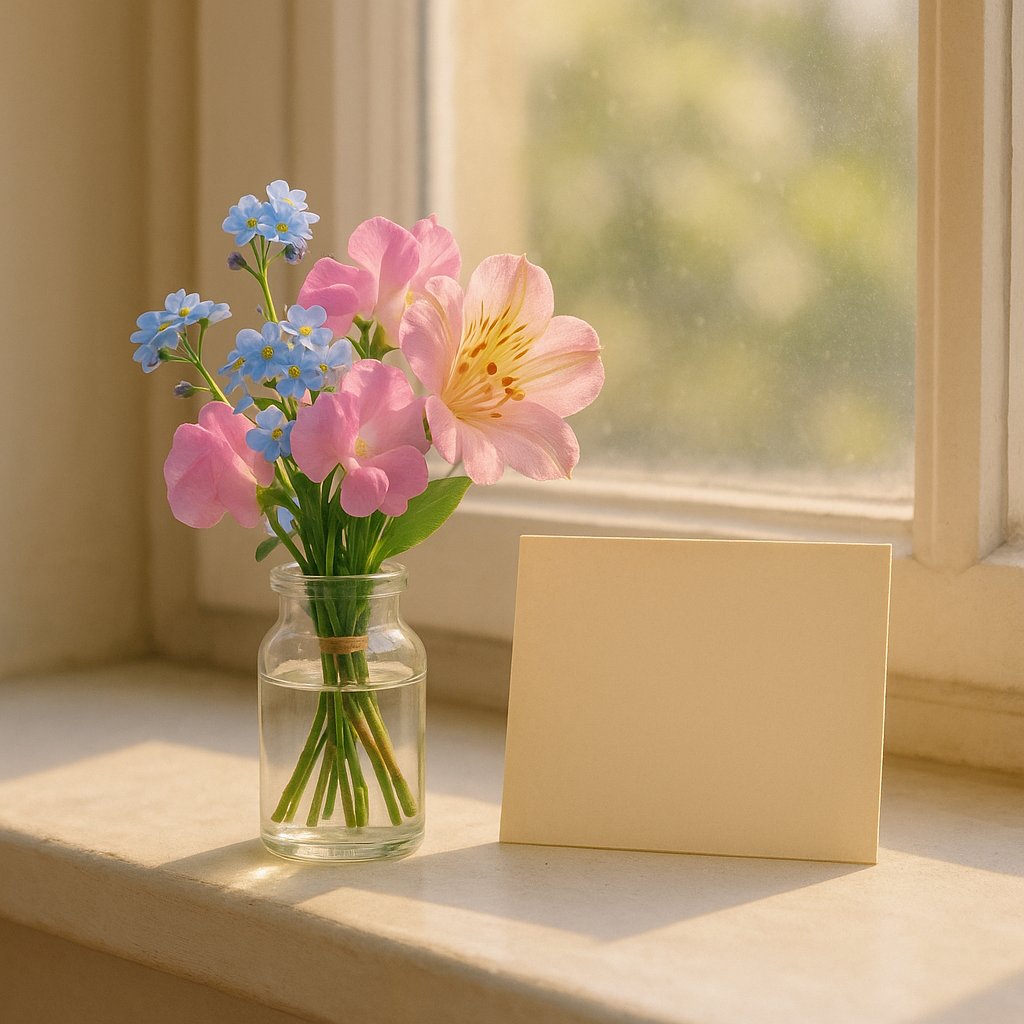
small bouquet of forget-me-nots and sweet peas on a windowsill with a blank card

Think about longevity, not just looks

This is the mistake I see most. A gorgeous but delicate bouquet that spends two days in transit can arrive looking tired. If there’s any travel involved, sturdier stems give you a better margin: alstroemeria, carnations, chrysanthemums, lisianthus and roses usually last 7–14 days with decent care. Delicate blooms like poppies or sweet peas are lovely, but they’re better for short, local journeys.

Consider the person, not just the symbolism

A heavily scented lily bunch is wonderful for some and a migraine trigger for others. Lilies are also toxic to cats, which matters if your partner has one. Ask a mutual friend, or think back: which colours do they wear, what’s on their kitchen table, what did they say about their grandmother’s garden? A personal detail beats a textbook meaning every time.

Sending across borders: what to know first

When you’re in different countries, logistics matter as much as the flowers. If the two of you are separated by a border, it helps to understand how international flower delivery usually works. Many services pass the order to a local florist in the recipient’s country rather than flying stems across the world. That tends to mean fresher flowers, but the exact varieties may differ slightly from the photo, so check the substitution policy.

A few practical points are worth checking before you order:

  1. Time zones. Work out what time the flowers are likely to arrive, and whether someone will be home to receive them.
  2. Local holidays. Valentine’s Day, Mother’s Day and other occasions fall on different dates in different countries, and busy periods can affect availability.
  3. Address details. Include a phone number and any building-access notes. Missed deliveries are the most common cause of disappointment.
  4. Import rules. Plant health rules apply to some cross-border shipments, particularly live plants. Cut flowers sent through a local florist are generally simpler, but it’s worth asking.

Making the moment land: the card and the timing

The card is where “I miss you” becomes specific. Generic lines like “Thinking of you” are fine, but a detail is better: “Missing our Sunday walks on the Heath.” Two sentences are plenty. If you’re worried about sounding soppy, remember that nobody has ever complained about feeling missed.

Timing is a quieter skill. Flowers on a birthday are expected. Flowers on a grey Wednesday, or the day before a tough presentation, are a surprise. Some couples I know also arrange a video call for when the flowers arrive, so the recipient opens the package while the sender is on screen. It turns a delivery into a shared moment.

Keeping the gesture going

One bouquet is lovely. A small ritual is better. Some people send something simple on the first of each month, or mark each “halfway” point before a visit. Others pick one flower that becomes “theirs” and use it again and again. Over time, that flower becomes a private language.

A small gesture with a long reach

Distance makes affection harder to show, so the thoughtful details matter more. Choose flowers with meaning and staying power, think about the person receiving them, check the practical details, and write a card that sounds like you. If you’d like to go further, look into how seasonal availability and local florist networks differ between countries. A little research can make the next bunch even more personal.

Uncategorized

The meaning of a single red tulip in romantic relationships

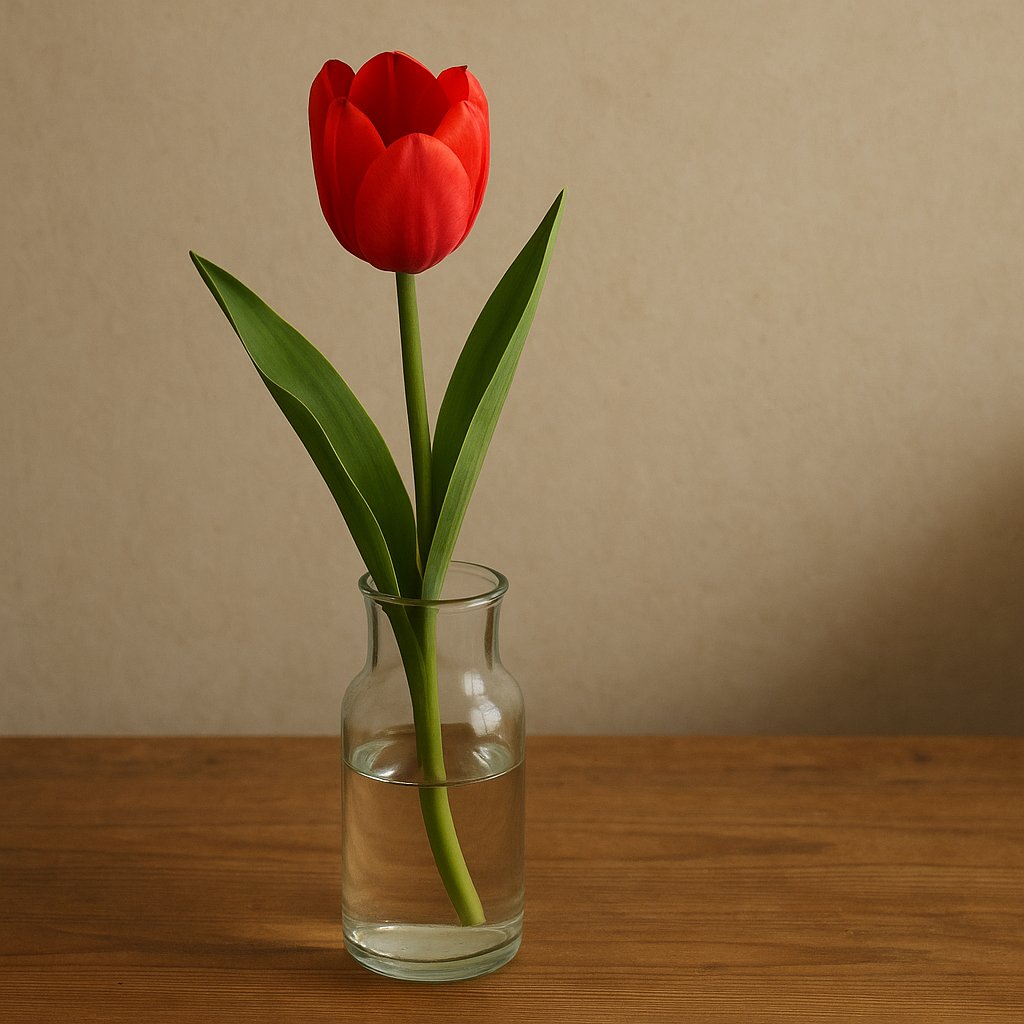
Picture a small paper-wrapped bouquet with exactly one red tulip in it. No baby’s breath, no ribbon, no card. Just a single cup-shaped bloom on a green stem. Is it a confession, a thank-you, or a florist’s shortcut? The answer depends on history, timing, and the people involved. I’ve watched friends argue over this exact question, so it deserves a proper look.

Where the red tulip got its romantic reputation

Tulips did not start out as American sweethearts. They came from Central Asia and were cultivated by the Ottomans, who prized them as symbols of abundance and divine beauty. Dutch growers later made them famous in Europe, and the 1630s “tulip mania” turned bulbs into status objects.

The romantic link is older than many people realize. A popular Persian and Turkish legend tells of Farhad, a heartbroken lover who, hearing false news that his beloved Shirin had died, rode his horse off a cliff. Red tulips are said to have sprouted where his blood fell. Literary scholars debate how much of this is folklore, but the story stuck: the red tulip stands for deep, almost consuming love.

In Victorian floriography, the “language of flowers,” a red tulip was commonly read as a declaration of love. Dictionaries of the era varied, so treat it as a tradition rather than a strict code.

What one red tulip says today

A single stem tends to be quieter than a dozen roses. That is exactly its strength. Here are the most common readings in modern American relationships:

  • “I love you,” said gently. Early in dating, a lone red tulip can be a low-pressure way to show real feeling without the drama of a grand gesture.
  • “I’m thinking of you.” Between long-term partners, one tulip on a desk or kitchen counter reads as affection, not obligation.
  • “I’m sorry, and I mean it.” After an argument, one flower can feel more sincere than an oversized bouquet that looks like a bribe.
  • “You’re my one.” The number one carries its own meaning. One flower suggests singular focus on a single person.

In my experience, the gesture lands best when it is tied to something personal. A tulip handed over with “these reminded me of your grandmother’s garden” says far more than the flower alone.

Context changes the message

Flowers never speak in a vacuum. The same red tulip can mean different things depending on the moment.

Stage of the relationship

On a second or third date, a single tulip signals interest and taste. Some people may read it as cautious, which is fine. In a marriage of twenty years, it can be a reminder that romance didn’t retire. Surprise matters more than size.

Season and freshness

Tulips are a spring flower, with peak availability in the U.S. from roughly March through May, and Washington State’s Skagit Valley and Holland, Michigan, host well-known tulip festivals. Giving one in February is a small flex: it suggests effort. Giving one in April feels natural and seasonal, like a little piece of spring.

Red versus other colors

Color Common meaning
Red Passion, declared love, devotion
Pink Affection, care, gentle admiration
Yellow Cheerfulness, friendship (older “hopeless love” readings are mostly outdated)
White Forgiveness, respect, new beginnings
Purple Admiration, elegance

single red tulip in a simple glass vase on a wooden table

How to give one so it means something

  1. Choose a stem that’s just opening. Tulips keep growing after they’re cut, so a bloom that’s slightly closed will look best for several days.
  2. Keep the presentation simple. Plain kraft paper or a slim bud vase lets the flower do the talking.
  3. Add a short, specific note. One sentence beats a paragraph. “Because you noticed I was tired” is better than “Happy Tuesday.”
  4. Mind the water. Trim the stem, use cool water, and keep it away from ripe fruit and direct heat. Tulips are sensitive to ethylene gas from fruit.
  5. Don’t use it as a substitute for conversation. A flower can open a door, but it can’t replace an honest talk after a real conflict.

When a single tulip might miss the mark

A few honest caveats. Some people simply prefer roses, and a lone tulip may seem minimal if they expect tradition on Valentine’s Day. Others might not know the symbolism at all and read it as “just a flower.” That isn’t a failure. If the meaning matters to you, say it out loud. Also, if you’re apologizing for something serious, one tulip alone won’t carry the weight.

The quiet power of one

A single red tulip works because it is deliberate. It carries centuries of legend, a clear color code, and the simple message that you chose this one thing for this one person. Pair it with a real sentence, a good moment, and a little attention, and it can say what a large bouquet sometimes can’t.

If this sparked your curiosity, try reading about Victorian floriography or the Persian story of Farhad and Shirin. You’ll find that nearly every flower on a grocery store shelf has a story worth knowing.

Uncategorized

What forget-me-nots mean in love, grief and remembrance

A few springs ago, I watched a woman kneel at the edge of a cemetery path in Oregon and press a pinch of tiny blue seeds into the soil near a headstone. She didn’t say much. She just patted the dirt, sat back, and smiled. “He hated lilies,” she told me. “These he would have tolerated.” That small, funny, tender moment says a lot about forget-me-nots. They are modest flowers that carry a heavy message.

Here is what this little blue bloom has meant to people in love, in grief and in remembrance, and why it still shows up in gardens, funerals and keepsakes in 2026.

Where the name came from

The plant is Myosotis, from the Greek for “mouse’s ear,” a nod to its soft, small leaves. The English name is much more romantic, and it echoes older European names. The German Vergissmeinnicht, the French ne m’oubliez pas and the Dutch vergeet-mij-nietje all say the same thing: do not forget me.

The best-known legend is a German one. A knight and his lady were walking by a river when he leaned down to pick a cluster of blue flowers for her. His armor pulled him into the current. As he went under, he threw the bouquet to her and cried, “Forget me not!” It’s almost certainly folklore, but it explains why the flower became tied to devotion and to loss at the same time.

Forget-me-nots as a symbol of love

In medieval and Victorian Europe, these flowers were a quiet promise. Blue was associated with loyalty and constancy, and the flower’s small size suited private gestures. Lovers exchanged them as tokens of faithfulness, especially when they were about to be separated by war, travel or family disapproval.

Victorian “floriography,” the so-called language of flowers, made this official. A bunch of forget-me-nots meant true love and remember me. Some sources add nuance, saying it could also mean “I will be faithful even when we’re apart.” It worked as a message you could hand over without saying a word.

The romantic meaning hasn’t vanished. I still see forget-me-nots tucked into wedding bouquets, printed on invitations and stitched into handkerchiefs. Brides sometimes carry them as a “something blue” that honors a relative who can’t be there, which blends love and memory neatly.

small bunch of blue forget-me-nots with yellow centers in a garden

Why they became a flower of grief

The shift from romance to mourning was natural. If “remember me” is a promise between living people, it becomes something deeper when one of them is gone. The message turns around: we will remember you.

A few reasons explain why this flower fits grief so well:

  • It returns. Forget-me-nots self-seed generously. A patch planted once can reappear every spring for years, which feels like memory that renews itself.
  • It is unshowy. Grief is rarely loud. A drift of small blue flowers feels gentler than a formal arrangement.
  • It blooms in spring. Flowering from roughly April to June in much of the US, it arrives just as the ground wakes up, pairing loss with continuity.
  • The color is calming. Blue is often linked with peace, sky and water, all common images in condolence traditions.

Many people plant them on graves or in memorial beds for exactly this reason. They don’t demand much care, and they tend to spread in a soft, natural way.

Remembrance in the wider world

The flower has also taken on public meanings well beyond personal mourning.

Alzheimer’s awareness

In the United States and elsewhere, the forget-me-not is widely used as a symbol for Alzheimer’s and dementia awareness. The link is poignant: the flower’s name is about not being forgotten, which is a fear for both people living with memory loss and the families who care for them. You will often see small blue pins or flower logos during awareness campaigns in autumn and on dementia-related walks.

Historical remembrance

In Germany, the flower was used as a badge of remembrance after World War I and in later decades. In Newfoundland, Canada, a forget-me-not emblem is worn in early July to honor those lost in the Battle of the Somme, where the Royal Newfoundland Regiment suffered devastating casualties. Alaska also chose the forget-me-not as its state flower in 1917, reportedly after a schoolboy’s design proposal and a territorial vote. Its small, hardy nature suited a place known for endurance.

Infant and pregnancy loss

Among bereaved parents, forget-me-nots often appear in memorial jewelry, remembrance gardens and hospital memory boxes. For families who have lost a baby, the flower offers a simple way to say a child existed and is still loved, even when others avoid the subject.

Practical ways to use forget-me-nots as a tribute

If you would like to honor someone with these flowers, you have more options than a bouquet. Here are a few that I’ve seen work well:

  1. Plant a small memorial patch. Scatter seeds in early spring or late summer in partial shade with moist soil. They thrive near ponds, under trees and along shady borders.
  2. Press a few blooms. Dried between heavy book pages, they hold their color surprisingly well. Frame them or slip them into a card or journal.
  3. Include them in a funeral or memorial arrangement. Even a few stems among white roses or ferns can give the piece a personal touch.
  4. Give a seed packet at a service. This is a quiet, lasting keepsake, and guests can plant them at home.
  5. Mark an anniversary. Some families bring a small pot of forget-me-nots to a grave on a birthday or death date each year.

One practical note: forget-me-nots can spread aggressively in some regions, and certain species are considered invasive in parts of the US. Check your state or local extension service before planting near natural areas, and choose native Myosotis species where they are recommended.

A small flower with a big job

Forget-me-nots mean remember me in love, we remember you in grief, and let’s not let this be lost in public remembrance. The meaning shifts with the moment, but the core stays the same: people matter, and memory is a form of care.

If this flower speaks to you, try reading about the Victorian language of flowers or the history of memorial gardens. You may find other quiet symbols that help you say what words sometimes can’t.

Uncategorized

The cheapest ways to send flowers across borders

My cousin once spent almost $180 to send a bouquet to her college roommate in Lisbon – a bouquet that, by the time it arrived, looked like it had survived a small storm. She wasn’t wrong to be upset. Sending flowers across borders is one of those small errands that feels like it should be simple, yet it’s tangled up with customs rules, currency conversions, courier surcharges, and florist markups that most people never think about until they’re staring at a checkout page in disbelief. If you’ve ever wondered why a bouquet that costs $40 domestically suddenly triples in price the moment you add an international address, you’re not alone.

The good news is that shipping flowers internationally doesn’t have to drain your wallet. There are a handful of strategies – some obvious, some less so – that can cut the cost significantly without sacrificing the quality of what arrives on the other end. This isn’t about finding shortcuts that compromise the gift; it’s about understanding how the international flower delivery system actually works so you can make smarter choices.

Why cross-border flower delivery costs so much in the first place

Flowers are perishable. That single fact drives almost every cost decision in this industry. Unlike a book or a t-shirt, a rose can’t sit in a customs warehouse for three days waiting for paperwork clearance. This means international florists rely on networks of local growers and delivery partners in the destination country rather than physically shipping a box of flowers across an ocean.

Here’s what actually happens most of the time: you place an order in the US, but the bouquet is sourced, arranged, and delivered by a florist who’s already located in – say – Germany or Japan. You’re not paying for international shipping in the traditional sense. You’re paying for a local delivery, plus a service fee for connecting you to that florist, plus currency conversion costs, plus whatever markup the platform adds for convenience.

  • Local sourcing and arrangement fees in the destination country
  • Same-day or next-day delivery surcharges (weekends and holidays cost more everywhere)
  • Currency exchange margins baked into the listed price
  • Platform or broker fees for coordinating between countries

Practical ways to cut the cost without cutting corners

Work with a network florist instead of a shipping company

This is probably the single biggest money-saver, and it’s counterintuitive at first. Companies that promise to “ship” flowers internationally – meaning they package a box and send it via FedEx or DHL – tend to be far more expensive and far less reliable than services built on a global network of local florists. When a florist in the destination city handles the arrangement, you skip customs delays, temperature control problems, and the steep international freight charges that come with actual physical shipping.

I’ve tested both approaches over the years for friends and family scattered across three continents, and the network-florist model wins on price almost every time – often by 30-40%.

Time your order around local holidays, not just US ones

This one trips people up constantly. If you’re sending flowers to Mexico around Día de los Muertos, or to Japan during Obon season, prices spike locally – not because of anything related to the US calendar. Checking the destination country’s holiday schedule before ordering can save you a surprising amount, since florists everywhere raise prices during their own peak demand windows, not America’s.

Compare bouquet composition, not just total price

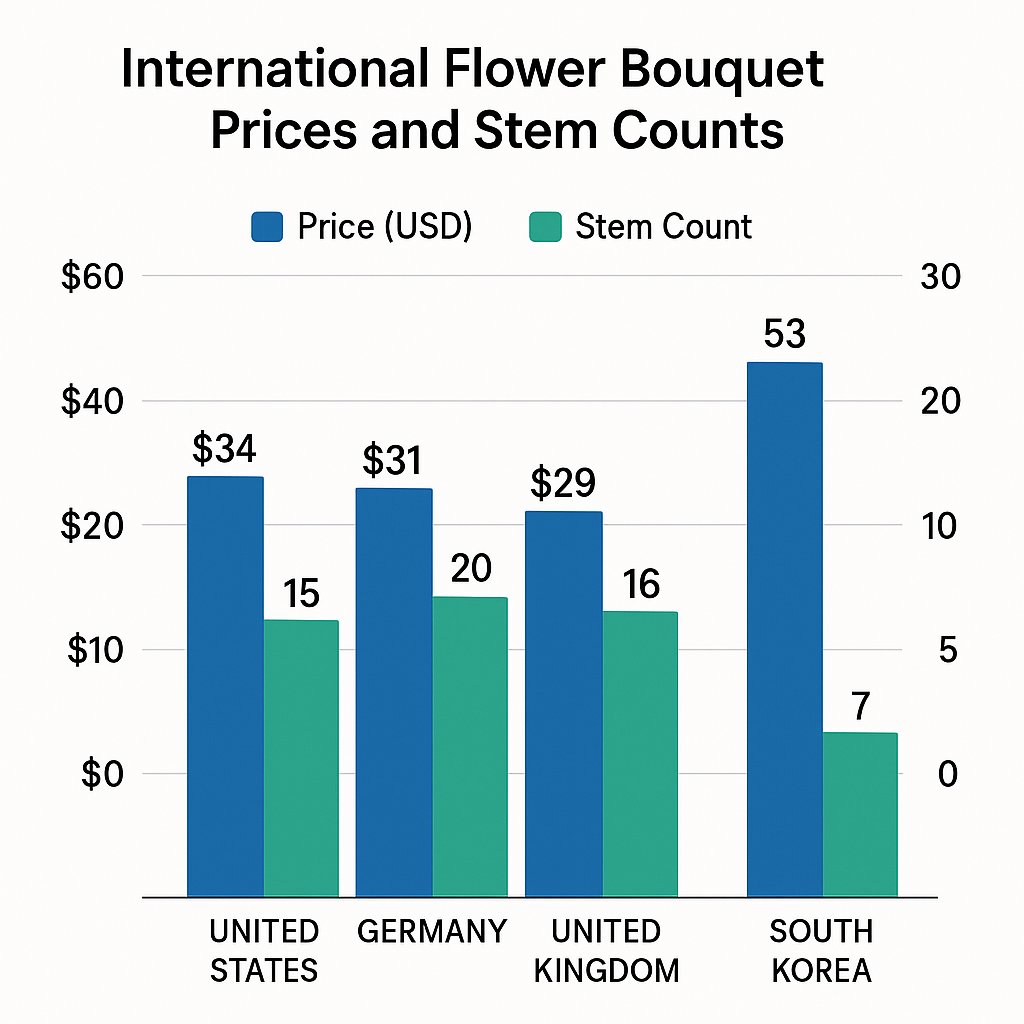
A $65 bouquet with dozen roses shipped from a boutique florist in Paris might actually cost less per stem than a $45 “value” arrangement padded with filler greenery. Always check what’s actually included – stem count, vase or no vase, and whether delivery is bundled into the quoted price or added separately at checkout.

comparison of international flower bouquet prices and stem counts

Consider timing flexibility over guaranteed same-day delivery

Same-day international delivery is almost always the priciest option, sometimes adding $15-25 to the base cost. If the occasion allows even a one-day buffer, standard delivery windows are notably cheaper across nearly every platform I’ve reviewed.

A quick comparison of common delivery approaches

Method Typical cost range Delivery speed
Global florist network $35-$70 Same day to 2 days
Courier-shipped boxed flowers $60-$150 2-5 days (customs risk)
Local florist direct contact $30-$60 Varies by country

Don’t skip the fine print on currency and fees

One thing that catches a lot of people off guard: the price you see at checkout in US dollars often includes a hidden currency conversion buffer of 3-5%. It’s not fraud – it’s just how cross-border pricing works – but it’s worth knowing before you compare two services side by side, since the “cheaper” one on the surface might have a worse exchange rate baked in.

When I’m looking for the most efficient and cheapest way to send flowers internationally, I usually start by checking whether the service has an established florist partner in the actual destination city, rather than a generic “we deliver worldwide” claim. That single detail tends to separate reasonable pricing from inflated one.

What I’d tell a friend before they hit “order”

Sending flowers abroad is one of those gestures that means more than its price tag suggests, but that doesn’t mean you need to overpay for the sentiment. Understanding how the local-florist model works, watching the destination country’s calendar instead of just your own, and reading the fine print on fees will get you most of the way to a fair price. The rest is just picking a bouquet that fits the moment. If you want to dig further into specific country-by-country delivery norms or seasonal pricing patterns, it’s worth spending twenty minutes researching before your next occasion rolls around – future you (and your recipient) will appreciate it.

Uncategorized

How flowers can inspire creative writing and poetry

A few years ago, I sat on a porch in Vermont watching a thunderstorm roll over a field of black-eyed Susans. The flowers bent sideways in the wind, snapped back, bent again. I hadn’t written anything in weeks – the kind of dry spell where you start wondering if you’ve ever had an original thought. But something about those stubborn golden heads refusing to stay down made me open a notebook. Forty minutes later, I had a rough draft of a poem I still like.

That moment taught me something I keep relearning: flowers are not just decorative subjects for greeting-card verse. They’re creative engines – packed with sensory data, symbolic weight, structural elegance, and emotional complexity. If you know how to approach them, they can unlock writing that surprises even you.

Why flowers work as creative catalysts – beyond the obvious

Most advice about flowers and writing stops at “describe what you see.” That’s a start, but it barely scratches the surface. Flowers activate multiple creative pathways at once, and understanding why can help you use them more deliberately.

They engage all five senses simultaneously

Pick up a sprig of lavender. You’re not just seeing purple – you’re feeling the woody stem, smelling that sharp herbal sweetness, hearing the buzz of whatever bee you just disturbed, maybe even tasting the floral dust on your lips. Very few objects in daily life trigger all five senses this quickly. For a writer, that’s gold. Sensory detail is the difference between flat prose and writing that puts readers inside an experience.

Try this: hold an actual flower (not a photo – the real thing) and spend two minutes cataloging what each sense picks up. You’ll be surprised how many unexpected descriptors emerge. A rose petal feels like the inside of a wrist. A marigold smells like copper and pepper. These strange, honest comparisons are where original language lives.

They carry centuries of symbolic meaning

During the Victorian era, floriography – the language of flowers – allowed people to communicate messages they couldn’t speak aloud. A yellow carnation meant disappointment. A striped carnation was a refusal. Red chrysanthemums declared love; white ones signified truth.

This symbolic vocabulary gives writers a ready-made subtext layer. You don’t have to explain that your character is grieving if you place white lilies on the kitchen table. You don’t need to spell out new beginnings if your narrator notices crocuses pushing through late snow. The flower does the emotional work, and the reader feels it without being told.

vintage Victorian floriography chart showing flowers and their symbolic meanings

Four approaches that go deeper than “describe a rose”

1. Use a flower’s life cycle as a narrative structure

A flower’s arc – from seed to bud to bloom to wilt to seed again – mirrors every good story. It has anticipation, a climax, a decline, and the promise of renewal. Try mapping a personal essay or poem onto this cycle. Start with something dormant (an unspoken feeling, a relationship before it began), move through the opening (the first conversation, the first crack in the surface), reach full bloom (the peak moment), and then let it fade honestly.

Sylvia Plath did this brilliantly in “Poppies in July,” using the flower’s brief, intense bloom as a framework for examining pain and numbness. The poppy didn’t just decorate the poem – it organized the emotional logic.

2. Let scent trigger memoir

Smell is the sense most tightly wired to memory – neuroscience confirms this. The olfactory bulb connects directly to the amygdala and hippocampus, the brain regions handling emotion and memory. This is why the scent of lilacs can teleport you to your grandmother’s yard faster than any photograph.

For personal narrative and memoir writing, this is incredibly practical. Keep a small bouquet on your desk – or even a scented candle that approximates jasmine, gardenia, or honeysuckle. As you write, let the scent pull associations forward. Don’t censor them. The memories that arrive sideways, triggered by fragrance rather than deliberate recall, tend to be the most vivid and emotionally true.

3. Study the flower’s physical architecture

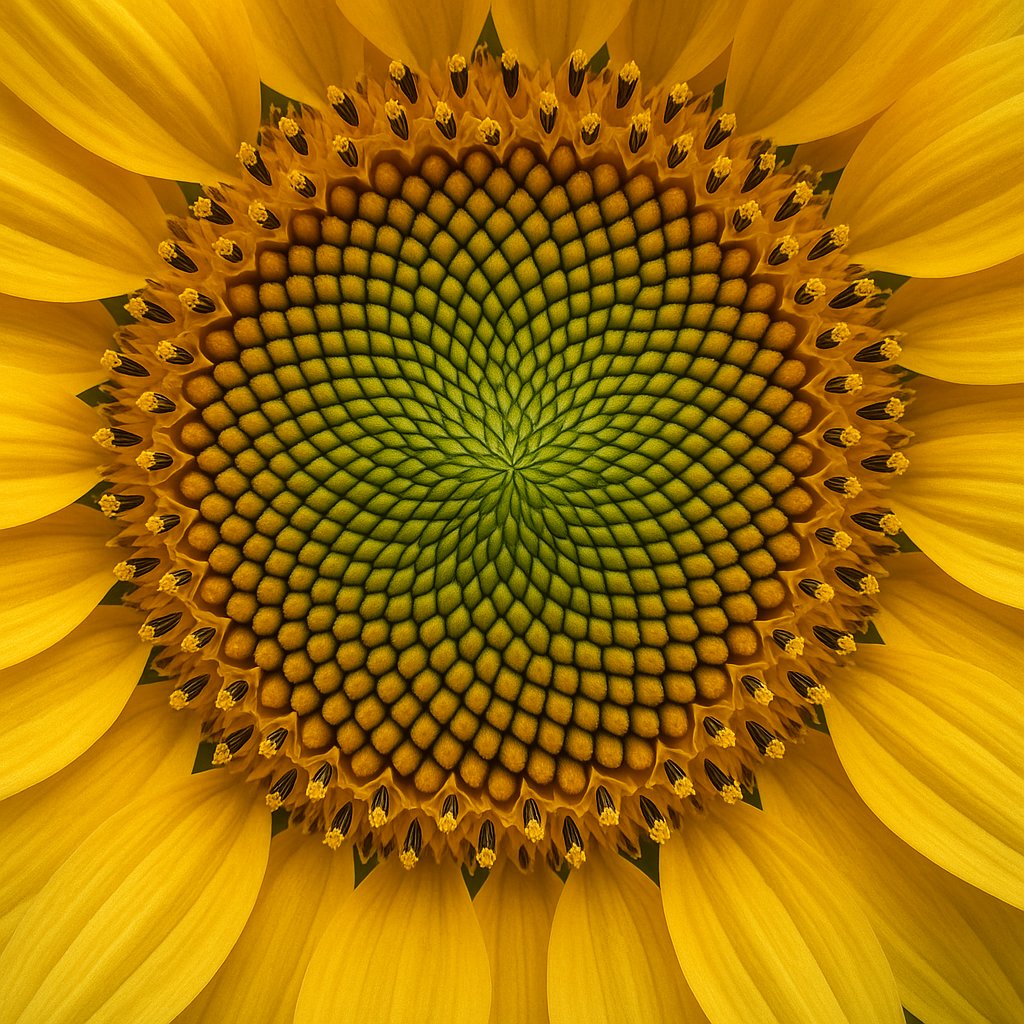
Most people glance at a sunflower and think “big yellow thing.” But look closer. A sunflower head contains hundreds of tiny florets arranged in intersecting spirals that follow the Fibonacci sequence – 34 spirals one way, 55 the other. That mathematical precision hiding inside apparent wildness is, honestly, a writing lesson on its own.

Studying how a flower is built trains the observational muscles that every writer needs. Examine how an iris unfolds in three layers. Notice that a snapdragon’s petals form a mouth that opens when you squeeze the sides. Look at how morning glory vines spiral counterclockwise – always counterclockwise. These details matter because precise observation is the foundation of original description. You can’t write something fresh about a flower if you’ve never really looked at one.

close-up of sunflower center showing Fibonacci spiral pattern in florets

4. Write against the cliché

Here’s where experienced writers separate themselves from beginners. Flowers have been so heavily romanticized in literature that they come pre-loaded with clichés. “A rose by any other name,” “pushing up daisies,” “bloom where you’re planted” – these phrases are dead on the page.

The trick is to use flowers in ways that defy expectation:

  • Write about an ugly flower – the corpse flower that smells like rotting meat, or the aggressive spread of kudzu blossoms
  • Give a flower a voice and let it complain about being picked, arranged, and thrown away after a dinner party
  • Describe a bouquet from the perspective of someone who hates the person who sent it
  • Use a wilting flower not as a symbol of death but of relief – finally letting go of the performance of being beautiful

Mary Oliver, one of America’s most celebrated nature poets, succeeded not because she wrote about flowers in predictable ways but because she brought a fierce, almost unsettling attention to them. Her daffodils weren’t sweet – they were “reckless.” Her poppies were “fire.” That tension between the softness we expect and the intensity she delivered is what made her work unforgettable.

A quick exercise you can try right now

Go outside – or to a grocery store, a farmer’s market, a neighbor’s garden – and choose one flower you wouldn’t normally notice. Not the showiest bloom, but the overlooked one. The weed flower growing through a sidewalk crack. The half-dead arrangement on a restaurant table.

Now write for ten minutes using these constraints:

  1. Describe it using only comparisons to things that have nothing to do with nature (machinery, food, fabric, architecture)
  2. Give it an emotion that seems wrong for its appearance – an aggressive daisy, a shy thorned cactus bloom
  3. End with a single sentence connecting this flower to a specific moment in your own life

This exercise works because it forces you past the first, obvious layer of description and into territory that feels genuinely yours. I’ve used it in workshops, and the results consistently surprise people – including writers who swore they had “nothing to say about flowers.”

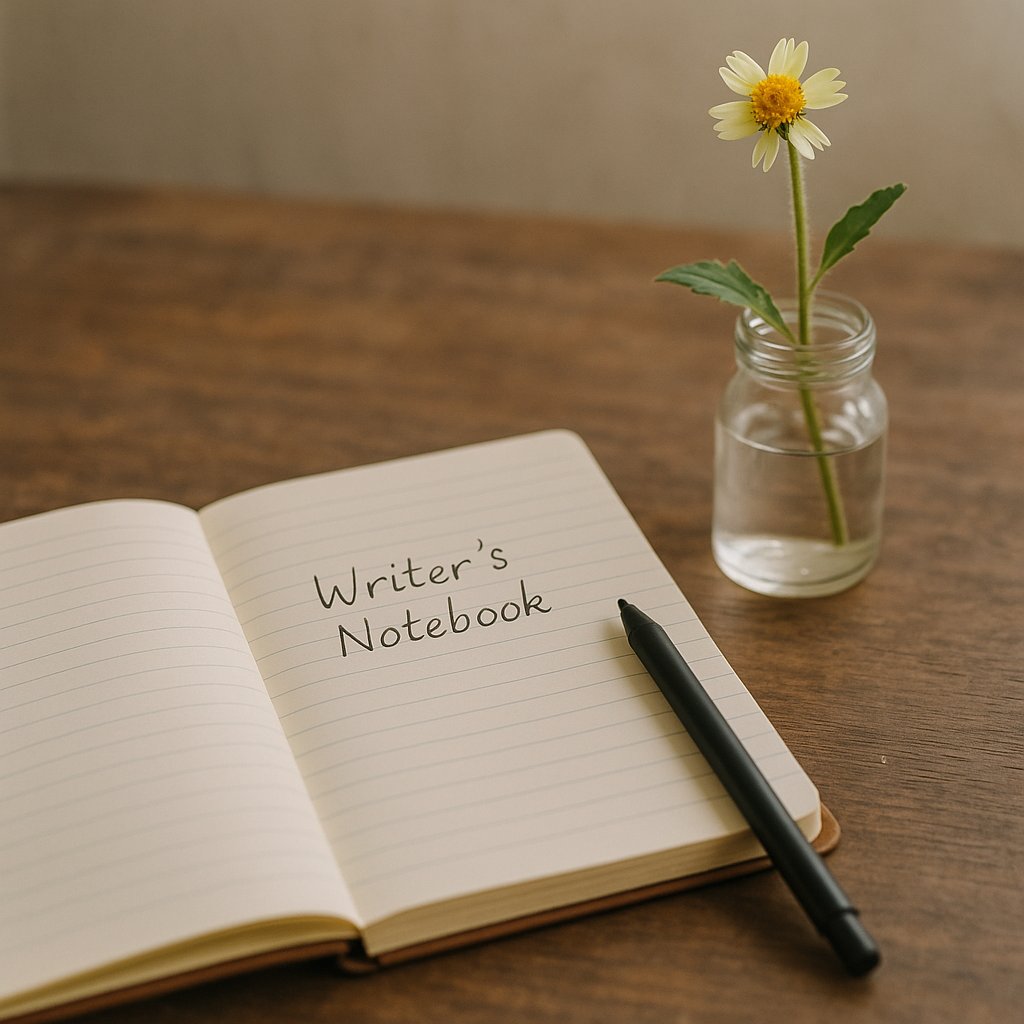
writer's notebook open on a table beside a single wildflower in a glass jar

The poets who got it right – and what they did differently

If you want to study how flowers fuel powerful writing, start with these names:

  • William Carlos Williams – his poem “Queen-Anne’s-Lace” turns a common roadside weed into an exploration of desire using nothing but precise visual description
  • Louise Glück – her collection “The Wild Iris” gives voice to garden flowers, letting them speak about existence, suffering, and faith. It won the Pulitzer Prize
  • Ross Gay – in “Catalog of Unabashed Gratitude,” he writes about flowers with a joy so specific and physical it becomes contagious
  • Emily Dickinson – she was a serious botanist who pressed over 400 specimens into an herbarium. Her flower poems carry scientific accuracy alongside emotional depth

What these writers share isn’t a love of prettiness – it’s a commitment to looking honestly and describing precisely. They treat flowers as complex subjects worthy of real attention, not as props for predetermined feelings.

Where this takes you

Flowers won’t write your poems for you. But they offer something that’s increasingly rare in a screen-saturated life: a reason to slow down and pay close attention to a physical object that changes, smells, decays, and regenerates. That act of sustained attention is, at its core, the same act as writing well.

Start small. One flower. One notebook. Ten honest minutes. See what surfaces. If the first attempt feels clumsy or forced, that’s normal – keep going. The clichés will burn off, and underneath them, you’ll find images and associations that belong only to you. That’s where real creative writing begins.

The role of ethylene in flower wilting and senescence

Ever brought home a gorgeous bouquet only to watch it collapse within two days? You changed the water, trimmed the stems, kept it out of direct sunlight – and still, petals drooped and colors faded almost overnight. The invisible culprit behind that frustrating decline is often a tiny gaseous molecule called ethylene. It’s the same plant hormone that ripens bananas on your counter, and it’s quietly orchestrating the death of your flowers from the inside out.

Understanding how ethylene works doesn’t just satisfy curiosity – it gives you practical tools to extend the life of cut flowers, improve garden performance, and even appreciate the remarkable biology happening in a simple vase on your kitchen table.

What exactly is ethylene, and why should flower lovers care?

Ethylene (C₂H₄) is a naturally occurring plant hormone – technically, the simplest unsaturated hydrocarbon. Plants produce it themselves, but it also wafts in from ripening fruit, vehicle exhaust, cigarette smoke, and even decaying plant material. Concentrations as low as 10 parts per billion (ppb) can trigger visible changes in sensitive flowers. That’s roughly equivalent to a single drop of water in a 50,000-liter swimming pool.

Here’s where it gets interesting: not all flowers respond to ethylene the same way. Carnations, orchids, petunias, delphiniums, and sweet peas are notoriously ethylene-sensitive. Expose a fresh carnation to ethylene, and it may wilt within hours. Meanwhile, flowers like chrysanthemums, sunflowers, and bird of paradise show relatively low sensitivity and hold up well even in ethylene-rich environments.

comparison chart showing ethylene-sensitive versus ethylene-resistant flower species

The biochemical chain reaction: from gas to wilting petals

Flower senescence isn’t random deterioration – it’s a genetically programmed process, and ethylene acts as one of its primary triggers. Here’s a simplified walkthrough of what happens at the molecular level.

Step 1: biosynthesis – the flower makes its own poison

Ethylene production in petals begins with the amino acid methionine. Through a well-characterized pathway, methionine is converted to S-adenosyl-L-methionine (SAM), then to 1-aminocyclopropane-1-carboxylic acid (ACC) by the enzyme ACC synthase, and finally to ethylene by ACC oxidase. What makes this particularly devastating is the autocatalytic nature of the process: once a small amount of ethylene is produced, it stimulates the flower to produce even more. Researchers sometimes call this “the ethylene avalanche.”

In carnations, for example, ethylene production in aging petals can surge by 10- to 100-fold within just 24 hours once the cascade begins. The genes encoding ACC synthase (ACS) and ACC oxidase (ACO) are upregulated dramatically during this window – essentially, the flower switches on its own self-destruct program.

Step 2: signal perception – the receptors that listen

Ethylene doesn’t just float around – it binds to specific receptor proteins embedded in the endoplasmic reticulum membrane. In the model plant Arabidopsis, five ethylene receptors have been identified (ETR1, ETR2, ERS1, ERS2, and EIN4). When ethylene binds, it deactivates the receptors, which in turn deactivates a negative regulator called CTR1. This releases the downstream signaling component EIN2, eventually activating transcription factors like EIN3 and EIL1 that switch on senescence-associated genes.

The practical takeaway? This receptor system explains why compounds like 1-methylcyclopropene (1-MCP) work so well. 1-MCP competes with ethylene for binding sites on those receptors – essentially jamming the signal before the cascade starts.

Step 3: cellular breakdown – the visible decline

Once senescence genes are activated, a series of destructive events unfold in petal cells:

  • Membrane integrity collapses. Phospholipids in cell membranes are degraded by enzymes like phospholipase D, leading to ion leakage and loss of turgor pressure – that’s the wilting you see.
  • Proteins are dismantled. Proteases break down cellular proteins, and the amino acids are recycled back into the plant body – a nutrient-salvage operation.
  • Pigments degrade. Anthocyanins and carotenoids are broken down or modified, causing color fading, browning, or that translucent appearance you notice in aging petals.
  • Programmed cell death (PCD) initiates. DNA fragmentation occurs, vacuoles rupture, and cells essentially self-digest. In some species, this happens petal by petal in a remarkably orderly sequence.

diagram of ethylene biosynthesis pathway from methionine to petal wilting

Not every flower plays by ethylene’s rules

Here’s something most articles miss: a significant number of commercially important flowers follow ethylene-independent senescence pathways. Lilies, tulips, irises, and daffodils wilt and die without much involvement from ethylene at all. Their senescence is instead regulated by other hormones (like abscisic acid) and transcription factors – particularly members of the NAC gene family.

Recent research has identified NAC transcription factors as master regulators of petal senescence in these species. For instance, in Japanese morning glory (Ipomoea nil), a NAC gene called EPHEMERAL1 directly controls the timing of petal wilting, and silencing it extended flower lifespan significantly – without touching the ethylene pathway at all.

This distinction matters practically. If you’re dealing with a lily that’s fading, treating it with anti-ethylene compounds like silver thiosulfate (STS) or 1-MCP won’t help much. The flower is following a different script entirely.

Practical strategies to slow down ethylene-driven wilting

Now, the part most people want: what can you actually do? Whether you’re a home gardener, a florist, or just someone who hates tossing out $15 bouquets after three days, these approaches target ethylene directly.

For cut flowers at home

  • Keep fruit away from flowers. A bowl of ripening apples or bananas on the same counter as your vase is essentially gassing your flowers. Move them to separate rooms if possible.
  • Ventilate. Ethylene accumulates in enclosed, warm spaces. Even cracking a window near your arrangement helps dissipate the gas before it reaches damaging concentrations.
  • Remove dying blooms immediately. Wilting flowers produce exponentially more ethylene, accelerating the decline of their healthier neighbors. Don’t wait – pull them out as soon as they start drooping.
  • Choose wisely. If you want a bouquet that lasts, lean toward low-sensitivity species: chrysanthemums, statice, protea, zinnias, and sunflowers routinely outlast ethylene-sensitive varieties by days.
  • Keep things cool. Ethylene production roughly doubles with every 10 °C (18 °F) rise in temperature. A cooler room – or even placing flowers in the refrigerator overnight – meaningfully slows the process.

For florists and growers

Commercial floriculture relies heavily on two chemical interventions:

  • Silver thiosulfate (STS): A pulse treatment applied at the farm or wholesale level. STS blocks ethylene receptors, extending vase life by 2–5 days in sensitive species like carnations and roses. However, silver is a heavy metal with environmental disposal concerns, which has driven the industry toward alternatives.
  • 1-Methylcyclopropene (1-MCP): A gaseous treatment applied in enclosed chambers. It binds irreversibly to ethylene receptors, providing longer-lasting protection than STS in many species. It’s already widely used for apple storage and is gaining traction in floriculture.

Beyond chemistry, cold chain management remains the single most impactful practice. The U.S. floral industry loses an estimated $400 million annually to postharvest waste – and a significant portion of that traces back to ethylene exposure during shipping, particularly when flowers share trucks with produce.

The bigger picture: why flowers are programmed to die

It’s easy to see senescence as a flaw, but from the plant’s perspective, it’s a feature. Once pollination occurs, petals become metabolically expensive to maintain. By dismantling them in an orderly way, the plant recycles nitrogen, phosphorus, and other nutrients into developing seeds and fruits. Ethylene often surges right after pollination – a signal that essentially says, “job done, shut down the display.”

This is why pollinated flowers wilt faster than unpollinated ones. In some orchid species, just placing pollen on the stigma triggers a measurable ethylene burst within hours. It’s elegant – and ruthlessly efficient.

side-by-side photo of fresh and senescent carnation petals showing color and turgor changes

Where the science is heading

Genetic modification offers intriguing possibilities. Researchers have already created transgenic carnations and petunias with silenced ACS or ACO genes, and these modified flowers lasted significantly longer than their conventional counterparts. In one study, transgenic carnations showed a vase life of 14–16 days compared to 6–8 days for unmodified flowers.

The challenge? Consumer acceptance remains mixed, especially in the U.S. and Europe, where GMO labeling debates extend into ornamental plants. CRISPR-based gene editing – which can achieve similar results without introducing foreign DNA – may offer a more publicly palatable path forward, though regulatory frameworks are still evolving as of 2026.

Meanwhile, breeding programs at institutions like Wageningen University and various Japanese research institutes are working to develop naturally long-lived varieties by selecting for low ethylene sensitivity. It’s slower than genetic modification, but it sidesteps the regulatory and public perception hurdles.

Key takeaways worth remembering

Ethylene is a natural, gaseous hormone that accelerates flower senescence through an autocatalytic biosynthetic pathway and a well-defined receptor signaling cascade. But not all flowers depend on ethylene to senesce – some follow entirely separate molecular programs. Understanding which category your flowers fall into determines which preservation strategies will actually work.

For most people, the simplest wins are environmental: keep flowers cool, separate them from fruit, remove fading blooms promptly, and ventilate the space. For professionals, STS and 1-MCP treatments remain the gold standard, though cold chain discipline arguably matters more.

If the intersection of plant biology, gardening, and everyday science fascinates you, exploring deeper resources on the topic can open up a whole new appreciation for the processes happening quietly in your garden and on your windowsill. The next time a flower wilts, you’ll know exactly what’s going on – and possibly how to buy it a few more days.

How to press and preserve flowers for herbarium specimens

In 1839, a teenage Emily Dickinson began pressing wildflowers between sheets of paper. By the time she was done, her herbarium held 424 dried specimens across 66 pages – a collection so well preserved that botanists still study it today at Harvard University. The thing is, Dickinson wasn’t a trained scientist. She was a curious person with a few basic tools and a lot of patience.

That’s the beauty of building a herbarium: it sits right at the intersection of science, art, and personal observation. Whether you’re a biology student documenting local flora, a nature journaler looking to deepen your practice, or someone who simply wants to capture a fleeting wildflower season, the process is surprisingly accessible. But “accessible” doesn’t mean “mindless.” The difference between a specimen that lasts two centuries and one that crumbles within a year comes down to technique – and a handful of details most beginner guides skip over.

Why bother pressing plants in the digital age?

You might wonder why anyone still flattens plants between paper when a smartphone photo takes half a second. Fair question. But a photograph captures appearance. A herbarium specimen preserves the actual organism – its cellular structure, its DNA, even chemical compounds that can be analyzed decades later. Researchers at institutions like the New York Botanical Garden and the Smithsonian regularly extract DNA from specimens collected over a hundred years ago to study how plant populations have shifted with climate change.

For non-scientists, the value is different but no less real. A pressed plant carries texture, scale, and a kind of presence that no image replicates. It forces you to slow down, look carefully at vein patterns, leaf arrangements, and the tiny structures you’d normally walk right past. I’ve found that people who start pressing plants suddenly notice far more on every hike – which species bloom first, which ones share the same patch of soil, how a single plant changes across the growing season.

What to collect – and what to leave alone

Before you pull anything out of the ground, pause. Ethical collecting matters, and in the U.S. it’s also a legal issue. Collecting from national parks is prohibited without a research permit. State parks vary by jurisdiction. Many native species – especially orchids, trilliums, and certain cacti – are protected under state endangered species laws. The safest approach:

  • Collect from your own yard, garden, or private land with permission.
  • Focus on abundant, widespread species rather than rare ones.
  • Never take more than you need – one or two representative specimens is enough.
  • Gather invasive species freely; documenting their spread is genuinely useful for science.
  • Check your state’s natural heritage program database before collecting wild plants on public land.

Which parts of the plant matter most?

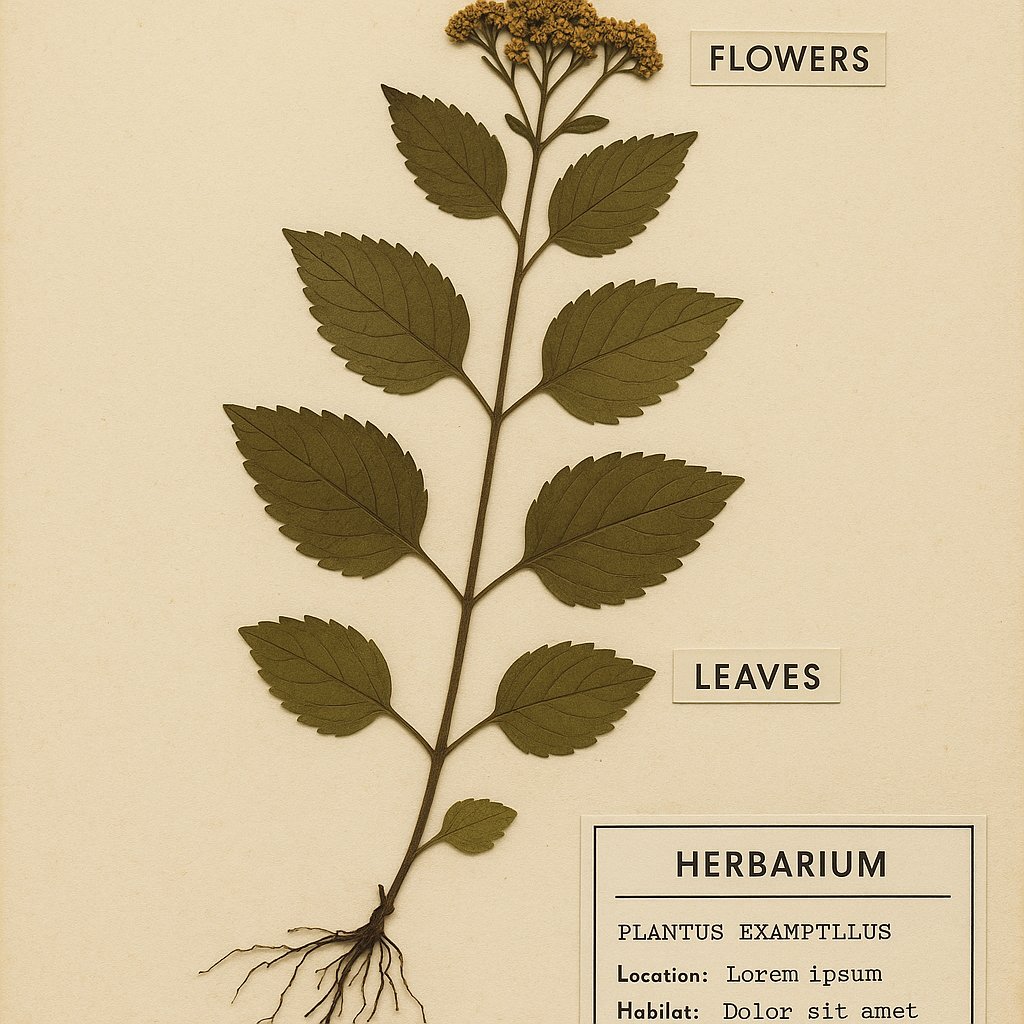
This is a gap I notice in many guides: they tell you to press flowers, but a proper herbarium specimen ideally includes the whole plant or at least multiple structures. Flowers alone make for pretty art, but they’re often insufficient for identification. Here’s what botanists actually want to see on a single sheet:

  • Leaves – both surfaces visible (flip one leaf over), showing the base and tip.
  • Flowers or fruit – ideally at different stages. If you can catch a bud, an open flower, and a developing seed pod, that’s gold.
  • Stems – enough to show branching pattern, whether it’s hairy or smooth, round or square in cross-section.
  • Roots – for small herbaceous plants, include the root system when possible. For trees and shrubs, skip this and note the bark texture in your label.

If the plant is too large for a standard 11.5 × 16.5-inch herbarium sheet, bend the stem into a V or N shape, or press representative sections separately and note on your label that they belong to the same individual.

Herbarium sheet showing a complete plant specimen with labeled roots, leaves, flowers, and a data label in the lower right corner

A step-by-step pressing method that actually works

Most tutorials describe the basic book-pressing method. That’s fine for casual flower crafts, but herbarium-quality specimens demand a bit more structure. Here’s the approach used in university herbaria across the country, adapted for home use.

Gear you’ll need

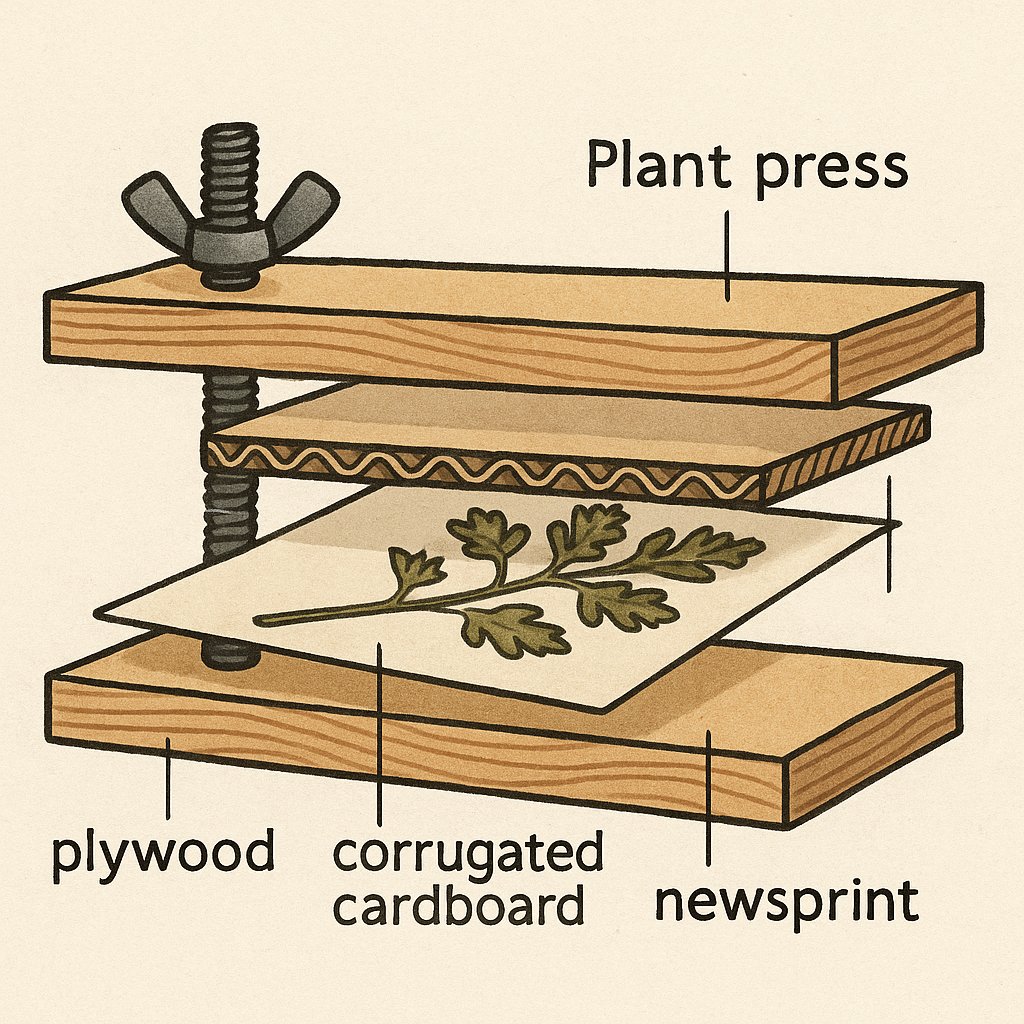
  • Two pieces of plywood or stiff cardboard (roughly 12 × 18 inches)
  • Corrugated cardboard ventilators (same size, with the flutes running the short way for airflow)
  • Absorbent paper – newsprint works well; avoid glossy or coated paper
  • Straps, belts, or heavy-duty rubber bands to tighten the press
  • A notebook or adhesive labels for field data

The process

  1. Collect during dry conditions. Wet plants invite mold – the number-one enemy of good specimens. If you must collect after rain, gently blot surfaces with a paper towel before pressing.
  2. Arrange immediately. Don’t toss plants into a bag and deal with them later. Wilted material is exponentially harder to position well. If you’re in the field, carry a field press or at least a few folded sheets of newspaper inside a rigid folder.
  3. Layer the sandwich. The stacking order matters: plywood board → corrugated cardboard → newspaper fold with plant inside → corrugated cardboard → newspaper fold with next plant → and so on, ending with cardboard and the second board on top.
  4. Tighten firmly. More pressure than you think is correct. Loose pressing leads to wrinkled, curled specimens. Cinch those straps down until the press feels solid.
  5. Change the paper. This is the step most beginners skip, and it’s the one that makes the biggest difference. After 24 hours, swap out the damp newsprint for dry sheets. Repeat daily for the first three to four days. The faster moisture leaves the plant, the better the color retention.
  6. Wait. Most specimens need two to four weeks of total drying time, depending on plant thickness and ambient humidity. A fully dried specimen feels papery and stiff, not at all flexible. If it bends without cracking, it’s not ready.

Cross-section diagram of a plant press showing layered plywood, corrugated cardboard, and newsprint with a pressed plant specimen

The “Polish pressing” alternative

Here’s a technique that rarely appears in American guides but is standard practice among European field botanists. Instead of a bulky wooden press, you use a stack of newspapers interleaved with blotting paper, placed under a board or heavy books, and you iron each newspaper layer with a warm (not hot) clothing iron after the first day. The heat accelerates moisture removal dramatically, often cutting drying time in half. It works especially well for fleshy plants – succulents, thick-petaled flowers – that tend to rot before they dry in a conventional press. Just keep the iron on a low setting, use a thin cloth barrier, and never apply steam.

Mounting, labeling, and long-term storage

A dried specimen without data is just a pretty dead plant. What transforms it into a scientific record – or even a meaningful personal keepsake – is the information you attach to it.

The herbarium label

Professional labels follow a standard format, and adopting it gives your collection real credibility. Include:

  • Scientific name (and common name if known)
  • Family
  • Location – be specific: county, state, GPS coordinates if possible
  • Habitat description – “moist roadside ditch in partial shade,” not just “outside”
  • Date of collection
  • Collector’s name and collection number
  • Notes – flower color (it fades!), scent, pollinators observed, associated species

That note about flower color deserves emphasis. Reds often dry to brown or black. Yellows hold up reasonably well. Blues and purples can shift. Write down the original color while you’re still looking at the living plant – future-you will thank past-you.

Mounting the specimen

Standard herbarium sheets are acid-free card stock, roughly 11.5 × 16.5 inches. Archival-quality mounting paper matters because regular cardboard or construction paper will yellow, become brittle, and damage your specimens over time. You can find acid-free sheets at most art supply stores.

For attachment, professional herbaria use a combination of methods:

  • Archival glue (PVA-based) applied sparingly to the back of the specimen
  • Thin linen tape strips across stems and thick sections
  • Small paper packets (called “fragment envelopes”) glued to the sheet to hold loose seeds, petals, or bits that fall off

Avoid clear tape, rubber cement, or hot glue – they degrade, discolor, and can make future scientific study impossible.

Keeping your collection safe for decades

Insect damage is a real threat. Dermestid beetles and booklice love dried plant material. Museums freeze incoming specimens at -20°F for 72 hours to kill any hitchhiking larvae. At home, you can seal finished sheets in zip-lock bags and place them in a chest freezer for three days. Repeat once a year if you live in a humid climate.

Store mounted sheets flat – never rolled or folded – in closed cabinets or archival boxes, away from direct sunlight and moisture. A climate-controlled room is ideal, but a dry closet works for personal collections.

Finished mounted herbarium sheet with a pressed wildflower specimen, linen tape strips, a fragment envelope, and a printed label

Mistakes that ruin specimens (and how to avoid them)

After years of watching students and hobbyists build their first herbaria, I’ve seen the same errors come up repeatedly. Here’s a quick cheat sheet:

Common mistake Why it matters Fix
Not changing paper often enough Trapped moisture causes mold and browning Swap newsprint daily for the first 3–4 days
Pressing only flowers, no leaves Specimen becomes unidentifiable Collect the whole plant or multiple organs
Skipping the label An unlabeled specimen has zero scientific value Write field data immediately – don’t rely on memory
Using too little pressure Wrinkled, curled, uneven drying Tighten straps firmly; add weight if needed
Storing in a damp area Mold and insect infestation Use sealed boxes in a dry, cool space; freeze annually

From pressed plants to something larger

Building a herbarium is one of those rare activities that sharpens your eye, grounds you in a place, and creates something that genuinely grows more valuable over time. Your collection doesn’t need to rival the Smithsonian’s 5 million sheets. Even a modest set of 30 or 40 local species, properly pressed and labeled, becomes a personal botanical archive – a snapshot of what grew where you lived, in the year you paid attention.

If you’re drawn to the idea of documenting the world through careful observation and the right words, you might enjoy exploring other ways to blend learning with creative expression. The team at Learn to Love Your Words shares thoughtful perspectives on how language, curiosity, and personal practice intersect – worth a look if this kind of slow, attentive work resonates with you.

Start small. Press one plant this week. Label it carefully. See what you notice that you never noticed before.

The secret life of roots: what happens beneath the soil

Imagine a single rye plant. Nothing special – just an ordinary grass growing in a pot of soil. In 1937, botanist Howard Dittmer carefully washed the roots of one such plant and counted them. The total? Roughly 14 billion root hairs, stretching across a combined length of over 6,000 miles. That’s enough to reach from New York to Tokyo and back.

We spend so much time admiring what grows above ground – the flowers, the fruit, the towering canopy – that we forget the real engine of plant life is working in total darkness, right beneath our feet. Roots don’t just anchor a plant. They negotiate, communicate, fight, and form alliances in ways that would rival any political drama.

Here’s what’s actually going on down there.

More than an anchor – how roots navigate their world

Most of us learned in school that roots grow downward because of gravity. That’s true, but it barely scratches the surface. Root tips contain specialized cells called statocytes that function like tiny gyroscopes, sensing gravitational pull and directing growth accordingly. But gravity is just one signal in an overwhelming flood of information.

Roots can detect moisture gradients and grow toward water sources – a behavior called hydrotropism. They sense patches of nutrient-rich soil and proliferate root hairs in those zones while essentially ignoring barren areas. They even respond to touch. When a root tip encounters a rock or compacted clay, it redirects itself around the obstacle, sometimes within hours.

What surprised researchers most in recent decades is that roots appear to “choose” their path. A 2012 study published in PLOS ONE showed that corn roots can distinguish between a nutrient-rich patch and an inert object of the same density. They don’t just blunder forward – they evaluate.

Cross-section diagram showing a root tip with labeled root cap, root hairs, and zone of elongation against a dark soil background

The rhizosphere – a bustling metropolis you can’t see

The rhizosphere is the narrow zone of soil immediately surrounding a root, and it might be the most ecologically dense habitat on the planet. In a single teaspoon of healthy rhizosphere soil, you can find more microorganisms than there are people on Earth – bacteria, fungi, protozoa, nematodes, and archaea all jostling for position.

But this isn’t chaos. It’s commerce.

The carbon-for-nutrients trade

Plants photosynthesize. Soil microbes don’t. So roots leak sugars, amino acids, and organic acids into the rhizosphere – sometimes investing 20 to 40 percent of all photosynthesized carbon into these root exudates. In return, bacteria and fungi break down minerals locked in soil particles and deliver them in plant-available forms. Phosphorus, iron, zinc – nutrients that a root alone could never access – flow to the plant through this underground economy.

Think of it like a farmers’ market operating 24/7, where the currency is carbon and the goods are minerals.

Mycorrhizal networks – the “Wood Wide Web”

Most people have heard of mycorrhizal fungi by now, but the scale of their work is still staggering. About 90% of land plant species form partnerships with these fungi. The fungal threads – called hyphae – extend far beyond the root’s own reach, effectively multiplying a plant’s absorptive surface area by 100 to 1,000 times.

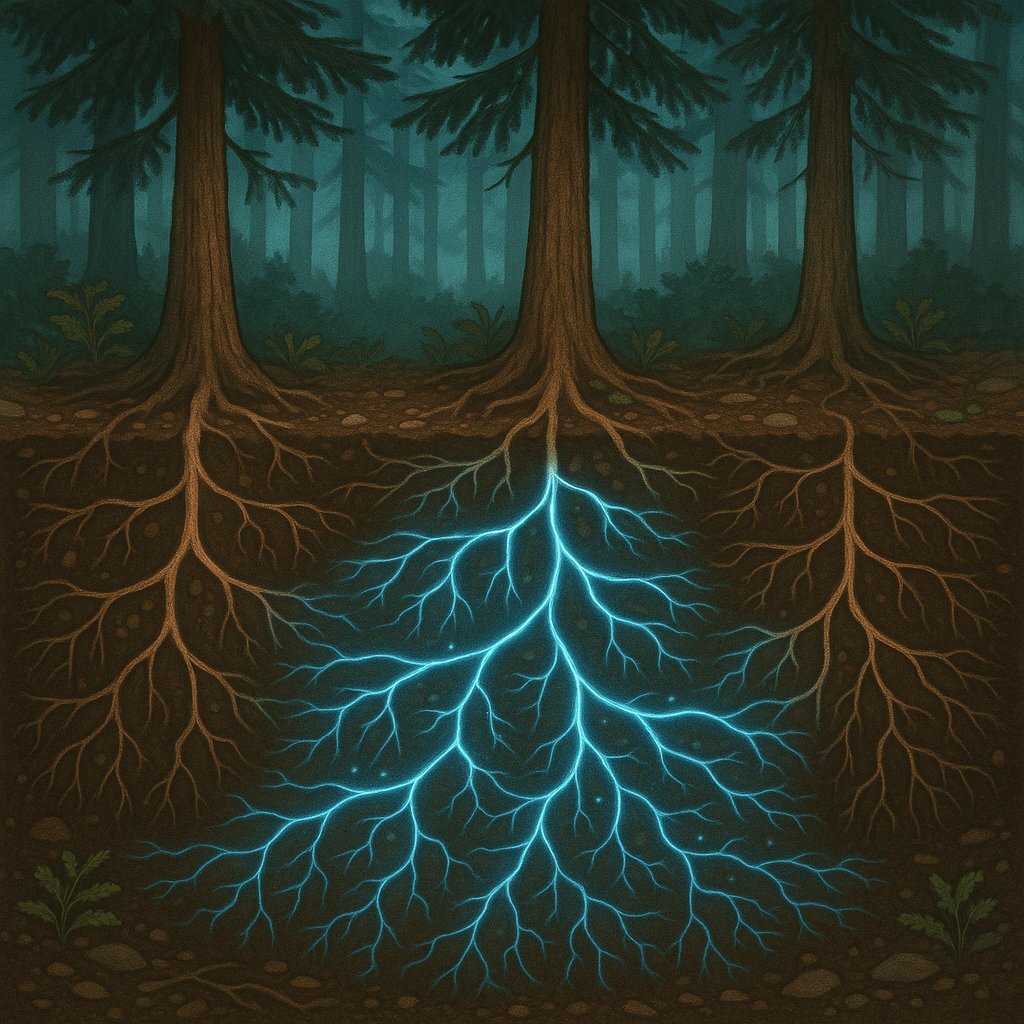
Here’s the part many articles skip: mycorrhizal networks connect multiple plants simultaneously. A mature Douglas fir in a Pacific Northwest forest can be linked to dozens of neighboring trees through shared fungal pathways. Research by ecologist Suzanne Simard at the University of British Columbia has shown that carbon, water, and even chemical warning signals travel between trees through these connections. Older “mother trees” appear to funnel resources to younger seedlings, particularly their own offspring.

This isn’t metaphor. It’s measurable nutrient transfer, tracked with isotopic labeling in controlled studies.

Illustration of a mycorrhizal fungal network with glowing hyphae threads connecting multiple plant root systems beneath a forest floor

How roots defend themselves – and call for backup

Roots are not passive victims of soil pathogens. They mount sophisticated defenses that researchers are only beginning to understand.

When a pathogenic fungus attacks, roots can:

  • Release antimicrobial compounds called phytoalexins directly into the surrounding soil
  • Recruit beneficial bacteria by altering the chemical composition of their exudates – essentially sending out a distress signal
  • Thicken cell walls at the point of infection to create physical barriers
  • Communicate the threat to neighboring roots (their own and sometimes other plants’) through chemical and electrical signals

A fascinating 2018 study in Science found that when tomato plants were attacked by a soil-borne pathogen, the composition of their root exudates shifted dramatically – attracting Bacillus bacteria that produce antibiotics effective against the specific attacker. The plant wasn’t just defending itself. It was recruiting mercenaries.

Nitrogen fixation – a partnership worth billions

Legumes – beans, peas, clover, alfalfa – have struck perhaps the most valuable deal in agriculture. Their roots form nodules that house Rhizobium bacteria, which convert atmospheric nitrogen (N₂) into ammonia the plant can use. This single biological process contributes an estimated 40 to 60 million metric tons of nitrogen to agricultural soils worldwide each year, saving farmers billions of dollars in synthetic fertilizer costs.

But the relationship isn’t automatic. The chemical handshake between legume roots and rhizobia involves a precise exchange of molecular signals – flavonoids from the root, Nod factors from the bacteria – and if the signals don’t match, the partnership simply doesn’t form. Each legume species recognizes only specific rhizobial strains, like a lock and key.

What damages this underground ecosystem?

Most competing articles mention tillage and chemical inputs in passing, but the mechanisms deserve a closer look.

Excessive tillage physically shreds mycorrhizal networks. Those fungal hyphae are thinner than human hair, and a single pass with a rototiller can destroy months of fungal growth. The network rebuilds, but slowly – and annual tilling never lets it reach full maturity.

High-phosphorus fertilization paradoxically suppresses mycorrhizal colonization. When phosphorus is abundant and easily accessible, plants stop investing carbon in their fungal partners. The fungi decline, and with them goes the plant’s extended nutrient-gathering network and disease resistance. It’s a classic case of short-term gain creating long-term vulnerability.

Soil compaction from heavy machinery limits root exploration. Roots in compacted soil grow shallower, are more vulnerable to drought, and access a smaller volume of nutrients. Interestingly, even roots in non-compacted soil grow differently in clay versus sandy loam – not because clay is “bad” soil, but because oxygen diffusion rates and mechanical resistance differ, and roots adapt their architecture accordingly.

Monoculture reduces the diversity of root exudates entering the soil, which in turn reduces microbial diversity. A field that grows the same crop year after year develops a less varied, less resilient soil microbiome. Cover cropping and crop rotation – practices central to regenerative agriculture – work partly because they introduce diverse root chemistries into the soil, feeding a broader range of beneficial organisms.

Side-by-side comparison showing a dense healthy root system in rich dark soil on the left versus a stunted shallow root system in pale compacted degraded soil on the right

What gardeners and growers can actually do

Understanding root biology isn’t just academic. It translates into practical choices that make a real difference, whether you’re managing a backyard garden bed or a 500-acre farm.

  1. Minimize soil disturbance. No-till or reduced-till practices preserve mycorrhizal networks and soil structure. If you must dig, do it selectively – transplanting holes rather than full-bed tilling.
  2. Feed the soil, not just the plant. Compost, mulch, and cover crops provide the carbon that root-associated microbes need to thrive. A diverse microbial community feeds roots more effectively than any single fertilizer.
  3. Plant diversity matters. Interplanting, polycultures, and diverse cover crop mixes create a richer rhizosphere. Each plant species attracts a slightly different microbial community, and together they build a more robust underground ecosystem.
  4. Water deeply and less often. Shallow, frequent watering encourages shallow root growth. Deeper, less frequent irrigation trains roots to explore lower soil horizons, making plants more drought-resilient.
  5. Stop fearing fungi. That white fuzz on your mulch? Probably beneficial saprophytic fungi breaking down organic matter. The mushrooms popping up in your garden beds? Often a sign of healthy soil biology, not disease.

Roots are rewriting what we know about plants

For centuries, we treated the soil as a static medium – just dirt that holds plants upright while fertilizer provides the food. That view is crumbling under the weight of evidence from soil science, molecular biology, and ecology. Roots are active participants in a living system of extraordinary complexity, making decisions, forming relationships, and shaping the very soil they inhabit.

Every time you step on earth, you’re walking over a network that took millions of years to evolve and can be damaged in a single afternoon with a plow. That’s worth pausing over.

If the hidden intelligence of plants fascinates you as much as it does me, keep exploring. The language of roots – chemical, electrical, fungal – is one of those subjects where every answer opens ten new questions. For more thought-provoking perspectives on topics that sit at the intersection of nature, language, and learning, Learn to Love Your Words offers a refreshing space to dig deeper into the ideas that shape how we understand our world.