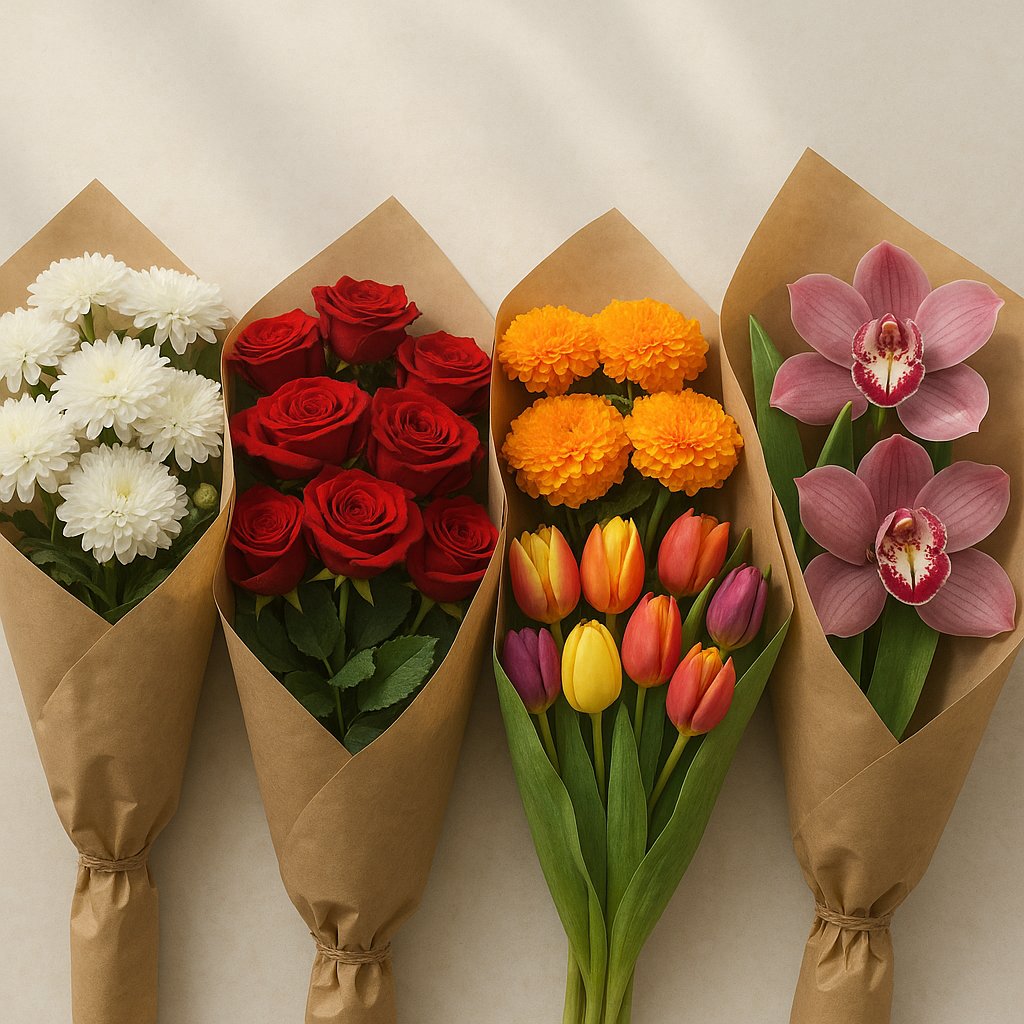
A friend of mine once sent a huge bouquet of white chrysanthemums to a colleague in Tokyo after she got a promotion. The gesture was kind. The flowers were a disaster. In Japan, white chrysanthemums are closely tied to funerals and grave offerings, and the colleague spent a few awkward minutes wondering whether it was a joke.
Flowers feel universal, but their meanings are not. A rose in Paris, a marigold in Mexico City and a lily in Warsaw each carry a different message. If you’re in the US and want to get it right for someone overseas, a little cultural homework goes a long way.
Why the same flower says different things
Flower symbolism grows out of religion, history and local ritual. Chrysanthemums bloom around All Saints’ Day in Europe, so in France, Italy, Belgium and Poland they became cemetery flowers. In East Asia they’re linked to autumn, memorial rites and, in Japan, the imperial family. Marigolds are bright and cheerful to an American eye, but in Mexico they guide spirits home during Día de Muertos.
Color adds another layer. White means purity at a US wedding, but it’s the mourning color in much of East Asia and parts of South Asia. Yellow suggests friendship in the US, yet in Russia and several neighboring countries it has long been read as a sign of parting or betrayal. Purple is tied to mourning in Brazil and some other Latin American countries.
A quick reference by region
| Region | Safe choices | Think twice |
|---|---|---|
| Japan | Seasonal mixed bouquets, peonies, orchids | White chrysanthemums, camellias for the sick, potted plants for hospitals, bunches of 4 or 9 |
| China | Red or pink peonies, orchids, lilies for celebrations | White or yellow chrysanthemums, sets of 4 |
| France, Italy, Spain | Seasonal bouquets, roses for romance | Chrysanthemums, and carnations in some contexts |
| Russia, Ukraine, Poland | Odd-numbered bouquets in mixed colors | Even numbers, yellow flowers for romance |
| Germany, Netherlands | Tulips, spring mixes, unfussy hand-tied bouquets | Red roses for someone you don’t know well, because the signal is romantic |
| Mexico, Latin America | Roses, gerberas, dahlias, bright mixes | Marigolds outside the Day of the Dead, yellow or purple flowers as a gift |
| India | Marigolds and jasmine for festivals, bright mixed bouquets | All-white arrangements for celebrations |
Treat this as a starting point, not a rulebook. Customs vary between cities, generations and families.
Numbers matter more than you’d expect
This is the detail Americans miss most often. In Russia, Ukraine, Belarus and the Baltic states, living people get odd numbers of flowers (3, 5, 7), and even numbers are kept for funerals. A dozen roses, the standard US gesture, can land badly there. In Japan and China, four sounds like the word for death, and in Japan nine can sound like “suffering.” Eight, by contrast, is lucky in Chinese culture.
A safe habit: before you order, ask how many stems are in the arrangement. If there’s any doubt, go for a mixed bouquet that’s clearly “a lot of flowers” rather than a counted set.
Roses, lilies and the romance problem
Red roses mean romance almost everywhere, and that’s exactly the trouble. Sending them to a coworker in Berlin, a host in Madrid or a friend’s mother in Seoul can suggest more than you intended. Pastel roses, tulips, freesias or a seasonal mix send a warmer, safer message.
Lilies are another gray area. In Italy and several other European countries they’re strongly tied to funerals. In parts of Latin America and the Middle East their scent is considered heavy. Meanwhile, the Netherlands and Turkey treat tulips as a point of national pride, so those rarely miss.
A note on hospital and sympathy etiquette
- In Japan, avoid potted plants for a patient. Roots suggest illness that “takes root.”
- In many countries, hospitals restrict strongly scented flowers, so ask first.
- For sympathy, check the faith and family tradition. Some Jewish and Muslim families prefer donations or food over flowers.
- In Hindu households, avoid sending anything made of leather or with a leather card holder. Plain paper is better.
Practical steps before you hit “order”
Culture is half the puzzle. The other half is logistics. Some countries, including Australia and New Zealand, have strict biosecurity rules, and cut flowers shipped across borders can face inspection or restrictions. That is why most reputable services that send flowers internationally work through local florists who source stems in the destination country rather than shipping a box from abroad. It keeps the flowers fresh and usually avoids customs trouble.
Here’s the checklist I use myself:
- Identify the occasion. Birthday, wedding, funeral and business thank-you each call for different choices.
- Ask a local. A quick message to a friend or relative in that country beats any guide.
- Check colors and stem counts. Especially for Eastern Europe and East Asia.
- Write the card in the local language if you can, or at least have it translated properly.
- Mind the date. Delivery during local holidays such as All Saints’ Day, Obon or Lunar New Year can be delayed, and some flowers carry a special meaning at those times.
When in doubt, keep it simple
Nobody expects you to memorize every custom. What people notice is the effort. A seasonal bouquet in soft, mixed colors, a thoughtful card and a quick question to someone local will almost always be received with warmth, even if you miss a nuance.
If this topic interests you, look into the flower traditions of one country you often send gifts to. Understanding a single holiday, like Mexico’s Día de Muertos or Japan’s hanami season, tends to teach you more about local flower culture than any list can.