My cousin once spent almost $180 to send a bouquet to her college roommate in Lisbon – a bouquet that, by the time it arrived, looked like it had survived a small storm. She wasn’t wrong to be upset. Sending flowers across borders is one of those small errands that feels like it should be simple, yet it’s tangled up with customs rules, currency conversions, courier surcharges, and florist markups that most people never think about until they’re staring at a checkout page in disbelief. If you’ve ever wondered why a bouquet that costs $40 domestically suddenly triples in price the moment you add an international address, you’re not alone.
The good news is that shipping flowers internationally doesn’t have to drain your wallet. There are a handful of strategies – some obvious, some less so – that can cut the cost significantly without sacrificing the quality of what arrives on the other end. This isn’t about finding shortcuts that compromise the gift; it’s about understanding how the international flower delivery system actually works so you can make smarter choices.
Why cross-border flower delivery costs so much in the first place
Flowers are perishable. That single fact drives almost every cost decision in this industry. Unlike a book or a t-shirt, a rose can’t sit in a customs warehouse for three days waiting for paperwork clearance. This means international florists rely on networks of local growers and delivery partners in the destination country rather than physically shipping a box of flowers across an ocean.
Here’s what actually happens most of the time: you place an order in the US, but the bouquet is sourced, arranged, and delivered by a florist who’s already located in – say – Germany or Japan. You’re not paying for international shipping in the traditional sense. You’re paying for a local delivery, plus a service fee for connecting you to that florist, plus currency conversion costs, plus whatever markup the platform adds for convenience.
- Local sourcing and arrangement fees in the destination country
- Same-day or next-day delivery surcharges (weekends and holidays cost more everywhere)
- Currency exchange margins baked into the listed price
- Platform or broker fees for coordinating between countries
Practical ways to cut the cost without cutting corners
Work with a network florist instead of a shipping company
This is probably the single biggest money-saver, and it’s counterintuitive at first. Companies that promise to “ship” flowers internationally – meaning they package a box and send it via FedEx or DHL – tend to be far more expensive and far less reliable than services built on a global network of local florists. When a florist in the destination city handles the arrangement, you skip customs delays, temperature control problems, and the steep international freight charges that come with actual physical shipping.
I’ve tested both approaches over the years for friends and family scattered across three continents, and the network-florist model wins on price almost every time – often by 30-40%.
Time your order around local holidays, not just US ones
This one trips people up constantly. If you’re sending flowers to Mexico around Día de los Muertos, or to Japan during Obon season, prices spike locally – not because of anything related to the US calendar. Checking the destination country’s holiday schedule before ordering can save you a surprising amount, since florists everywhere raise prices during their own peak demand windows, not America’s.
Compare bouquet composition, not just total price
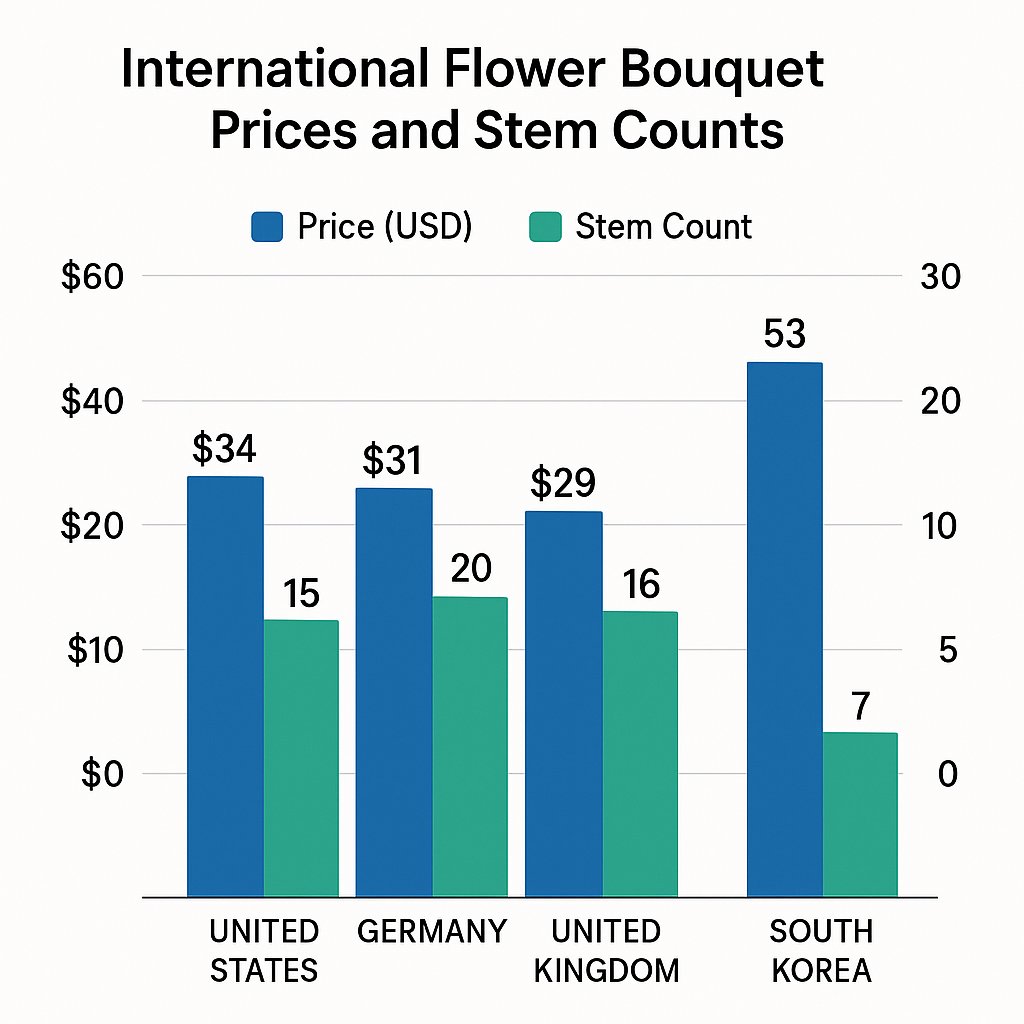
A $65 bouquet with dozen roses shipped from a boutique florist in Paris might actually cost less per stem than a $45 “value” arrangement padded with filler greenery. Always check what’s actually included – stem count, vase or no vase, and whether delivery is bundled into the quoted price or added separately at checkout.
Consider timing flexibility over guaranteed same-day delivery
Same-day international delivery is almost always the priciest option, sometimes adding $15-25 to the base cost. If the occasion allows even a one-day buffer, standard delivery windows are notably cheaper across nearly every platform I’ve reviewed.
A quick comparison of common delivery approaches
| Method | Typical cost range | Delivery speed |
|---|---|---|
| Global florist network | $35-$70 | Same day to 2 days |
| Courier-shipped boxed flowers | $60-$150 | 2-5 days (customs risk) |
| Local florist direct contact | $30-$60 | Varies by country |
Don’t skip the fine print on currency and fees
One thing that catches a lot of people off guard: the price you see at checkout in US dollars often includes a hidden currency conversion buffer of 3-5%. It’s not fraud – it’s just how cross-border pricing works – but it’s worth knowing before you compare two services side by side, since the “cheaper” one on the surface might have a worse exchange rate baked in.
When I’m looking for the most efficient and cheapest way to send flowers internationally, I usually start by checking whether the service has an established florist partner in the actual destination city, rather than a generic “we deliver worldwide” claim. That single detail tends to separate reasonable pricing from inflated one.
What I’d tell a friend before they hit “order”
Sending flowers abroad is one of those gestures that means more than its price tag suggests, but that doesn’t mean you need to overpay for the sentiment. Understanding how the local-florist model works, watching the destination country’s calendar instead of just your own, and reading the fine print on fees will get you most of the way to a fair price. The rest is just picking a bouquet that fits the moment. If you want to dig further into specific country-by-country delivery norms or seasonal pricing patterns, it’s worth spending twenty minutes researching before your next occasion rolls around – future you (and your recipient) will appreciate it.