What flowers mean in different countries: cultural rules to know before you send a bouquet abroad

A friend of mine once sent a huge bouquet of white chrysanthemums to a colleague in Tokyo after she got a promotion. The gesture was kind. The flowers were a disaster. In Japan, white chrysanthemums are closely tied to funerals and grave offerings, and the colleague spent a few awkward minutes wondering whether it was a joke.

Flowers feel universal, but their meanings are not. A rose in Paris, a marigold in Mexico City and a lily in Warsaw each carry a different message. If you’re in the US and want to get it right for someone overseas, a little cultural homework goes a long way.

Why the same flower says different things

Flower symbolism grows out of religion, history and local ritual. Chrysanthemums bloom around All Saints’ Day in Europe, so in France, Italy, Belgium and Poland they became cemetery flowers. In East Asia they’re linked to autumn, memorial rites and, in Japan, the imperial family. Marigolds are bright and cheerful to an American eye, but in Mexico they guide spirits home during Día de Muertos.

Color adds another layer. White means purity at a US wedding, but it’s the mourning color in much of East Asia and parts of South Asia. Yellow suggests friendship in the US, yet in Russia and several neighboring countries it has long been read as a sign of parting or betrayal. Purple is tied to mourning in Brazil and some other Latin American countries.

A quick reference by region

Region Safe choices Think twice
Japan Seasonal mixed bouquets, peonies, orchids White chrysanthemums, camellias for the sick, potted plants for hospitals, bunches of 4 or 9
China Red or pink peonies, orchids, lilies for celebrations White or yellow chrysanthemums, sets of 4
France, Italy, Spain Seasonal bouquets, roses for romance Chrysanthemums, and carnations in some contexts
Russia, Ukraine, Poland Odd-numbered bouquets in mixed colors Even numbers, yellow flowers for romance
Germany, Netherlands Tulips, spring mixes, unfussy hand-tied bouquets Red roses for someone you don’t know well, because the signal is romantic
Mexico, Latin America Roses, gerberas, dahlias, bright mixes Marigolds outside the Day of the Dead, yellow or purple flowers as a gift
India Marigolds and jasmine for festivals, bright mixed bouquets All-white arrangements for celebrations

Treat this as a starting point, not a rulebook. Customs vary between cities, generations and families.
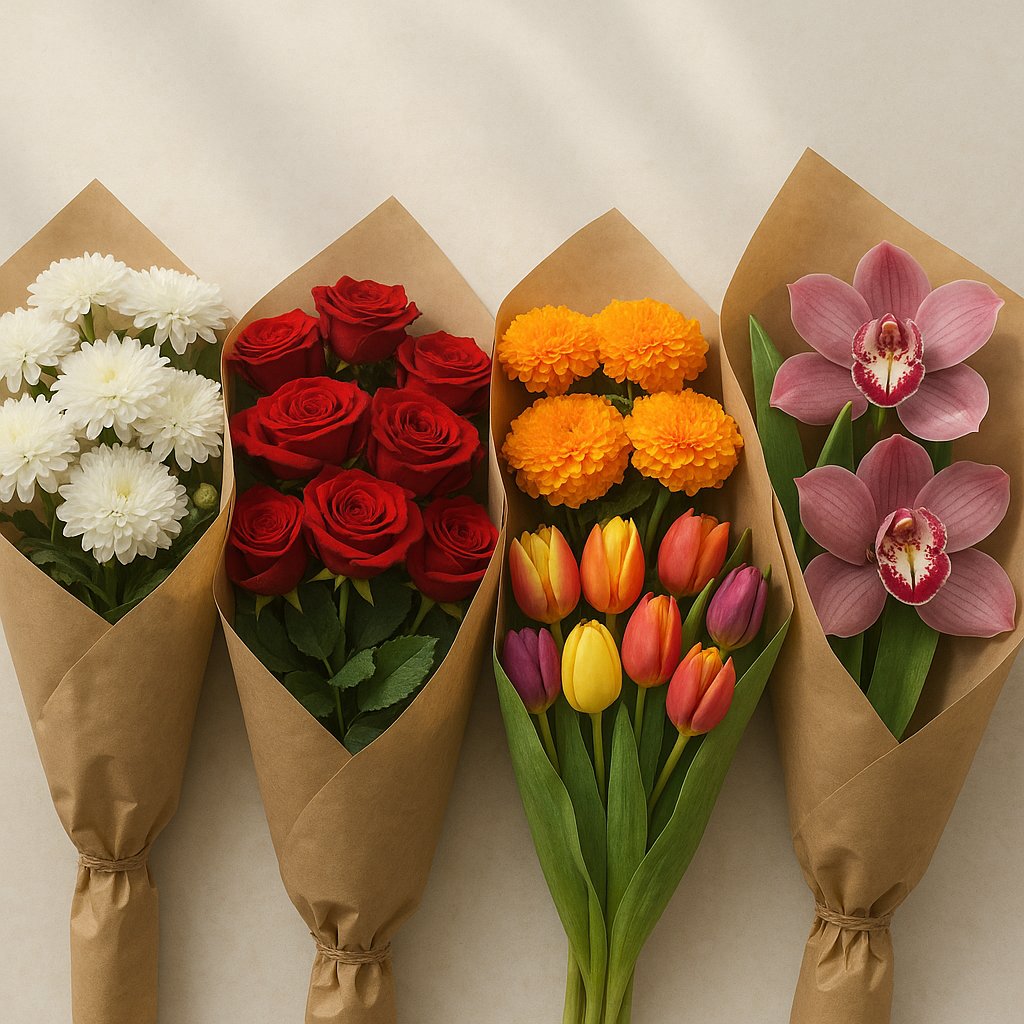
different bouquets side by side: white chrysanthemums, red roses, marigolds, tulips and orchids

Numbers matter more than you’d expect

This is the detail Americans miss most often. In Russia, Ukraine, Belarus and the Baltic states, living people get odd numbers of flowers (3, 5, 7), and even numbers are kept for funerals. A dozen roses, the standard US gesture, can land badly there. In Japan and China, four sounds like the word for death, and in Japan nine can sound like “suffering.” Eight, by contrast, is lucky in Chinese culture.

A safe habit: before you order, ask how many stems are in the arrangement. If there’s any doubt, go for a mixed bouquet that’s clearly “a lot of flowers” rather than a counted set.

Roses, lilies and the romance problem

Red roses mean romance almost everywhere, and that’s exactly the trouble. Sending them to a coworker in Berlin, a host in Madrid or a friend’s mother in Seoul can suggest more than you intended. Pastel roses, tulips, freesias or a seasonal mix send a warmer, safer message.

Lilies are another gray area. In Italy and several other European countries they’re strongly tied to funerals. In parts of Latin America and the Middle East their scent is considered heavy. Meanwhile, the Netherlands and Turkey treat tulips as a point of national pride, so those rarely miss.

A note on hospital and sympathy etiquette

  • In Japan, avoid potted plants for a patient. Roots suggest illness that “takes root.”
  • In many countries, hospitals restrict strongly scented flowers, so ask first.
  • For sympathy, check the faith and family tradition. Some Jewish and Muslim families prefer donations or food over flowers.
  • In Hindu households, avoid sending anything made of leather or with a leather card holder. Plain paper is better.

Practical steps before you hit “order”

Culture is half the puzzle. The other half is logistics. Some countries, including Australia and New Zealand, have strict biosecurity rules, and cut flowers shipped across borders can face inspection or restrictions. That is why most reputable services that send flowers internationally work through local florists who source stems in the destination country rather than shipping a box from abroad. It keeps the flowers fresh and usually avoids customs trouble.

Here’s the checklist I use myself:

  1. Identify the occasion. Birthday, wedding, funeral and business thank-you each call for different choices.
  2. Ask a local. A quick message to a friend or relative in that country beats any guide.
  3. Check colors and stem counts. Especially for Eastern Europe and East Asia.
  4. Write the card in the local language if you can, or at least have it translated properly.
  5. Mind the date. Delivery during local holidays such as All Saints’ Day, Obon or Lunar New Year can be delayed, and some flowers carry a special meaning at those times.

When in doubt, keep it simple

Nobody expects you to memorize every custom. What people notice is the effort. A seasonal bouquet in soft, mixed colors, a thoughtful card and a quick question to someone local will almost always be received with warmth, even if you miss a nuance.

If this topic interests you, look into the flower traditions of one country you often send gifts to. Understanding a single holiday, like Mexico’s Día de Muertos or Japan’s hanami season, tends to teach you more about local flower culture than any list can.
The meaning of a single red tulip in romantic relationships

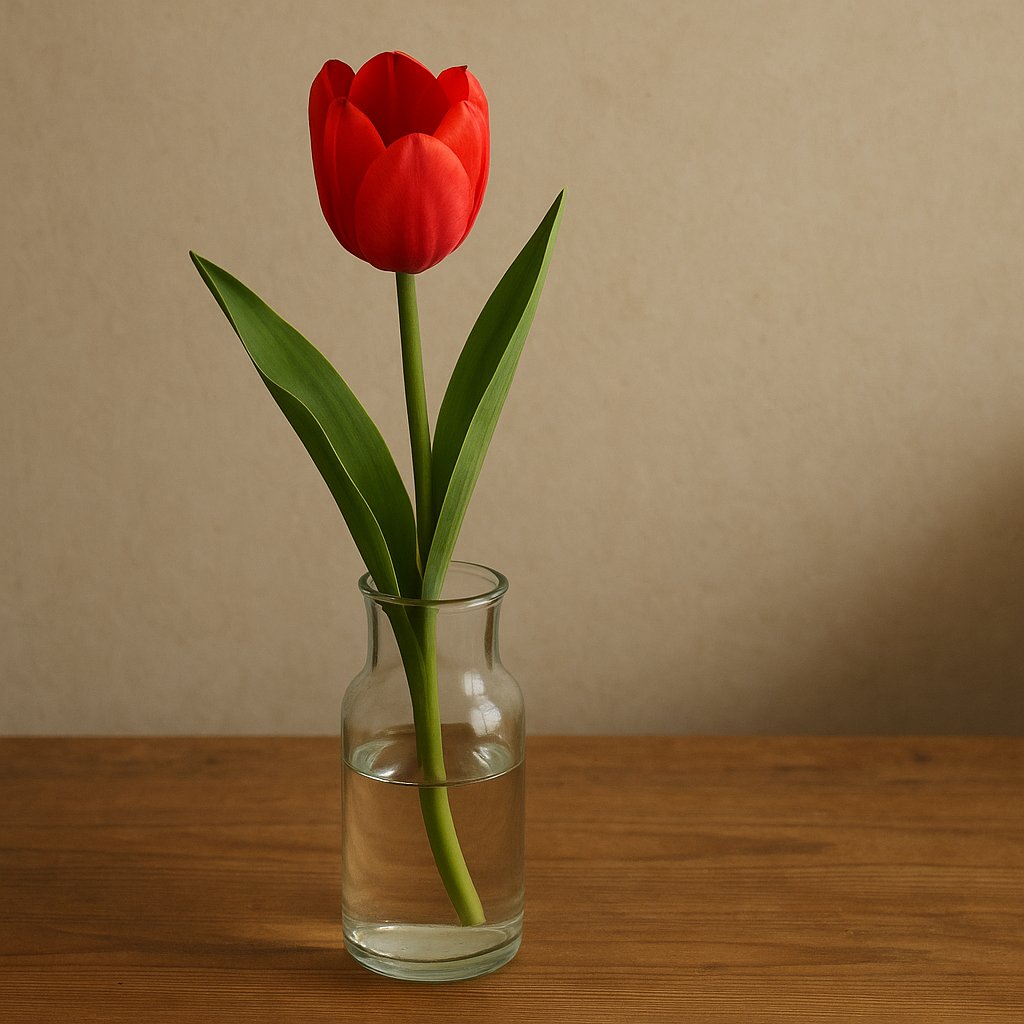
Picture a small paper-wrapped bouquet with exactly one red tulip in it. No baby’s breath, no ribbon, no card. Just a single cup-shaped bloom on a green stem. Is it a confession, a thank-you, or a florist’s shortcut? The answer depends on history, timing, and the people involved. I’ve watched friends argue over this exact question, so it deserves a proper look.

Where the red tulip got its romantic reputation

Tulips did not start out as American sweethearts. They came from Central Asia and were cultivated by the Ottomans, who prized them as symbols of abundance and divine beauty. Dutch growers later made them famous in Europe, and the 1630s “tulip mania” turned bulbs into status objects.

The romantic link is older than many people realize. A popular Persian and Turkish legend tells of Farhad, a heartbroken lover who, hearing false news that his beloved Shirin had died, rode his horse off a cliff. Red tulips are said to have sprouted where his blood fell. Literary scholars debate how much of this is folklore, but the story stuck: the red tulip stands for deep, almost consuming love.

In Victorian floriography, the “language of flowers,” a red tulip was commonly read as a declaration of love. Dictionaries of the era varied, so treat it as a tradition rather than a strict code.

What one red tulip says today

A single stem tends to be quieter than a dozen roses. That is exactly its strength. Here are the most common readings in modern American relationships:

  • “I love you,” said gently. Early in dating, a lone red tulip can be a low-pressure way to show real feeling without the drama of a grand gesture.
  • “I’m thinking of you.” Between long-term partners, one tulip on a desk or kitchen counter reads as affection, not obligation.
  • “I’m sorry, and I mean it.” After an argument, one flower can feel more sincere than an oversized bouquet that looks like a bribe.
  • “You’re my one.” The number one carries its own meaning. One flower suggests singular focus on a single person.

In my experience, the gesture lands best when it is tied to something personal. A tulip handed over with “these reminded me of your grandmother’s garden” says far more than the flower alone.

Context changes the message

Flowers never speak in a vacuum. The same red tulip can mean different things depending on the moment.

Stage of the relationship

On a second or third date, a single tulip signals interest and taste. Some people may read it as cautious, which is fine. In a marriage of twenty years, it can be a reminder that romance didn’t retire. Surprise matters more than size.

Season and freshness

Tulips are a spring flower, with peak availability in the U.S. from roughly March through May, and Washington State’s Skagit Valley and Holland, Michigan, host well-known tulip festivals. Giving one in February is a small flex: it suggests effort. Giving one in April feels natural and seasonal, like a little piece of spring.

Red versus other colors

Color Common meaning
Red Passion, declared love, devotion
Pink Affection, care, gentle admiration
Yellow Cheerfulness, friendship (older “hopeless love” readings are mostly outdated)
White Forgiveness, respect, new beginnings
Purple Admiration, elegance

single red tulip in a simple glass vase on a wooden table

How to give one so it means something

  1. Choose a stem that’s just opening. Tulips keep growing after they’re cut, so a bloom that’s slightly closed will look best for several days.
  2. Keep the presentation simple. Plain kraft paper or a slim bud vase lets the flower do the talking.
  3. Add a short, specific note. One sentence beats a paragraph. “Because you noticed I was tired” is better than “Happy Tuesday.”
  4. Mind the water. Trim the stem, use cool water, and keep it away from ripe fruit and direct heat. Tulips are sensitive to ethylene gas from fruit.
  5. Don’t use it as a substitute for conversation. A flower can open a door, but it can’t replace an honest talk after a real conflict.

When a single tulip might miss the mark

A few honest caveats. Some people simply prefer roses, and a lone tulip may seem minimal if they expect tradition on Valentine’s Day. Others might not know the symbolism at all and read it as “just a flower.” That isn’t a failure. If the meaning matters to you, say it out loud. Also, if you’re apologizing for something serious, one tulip alone won’t carry the weight.

The quiet power of one

A single red tulip works because it is deliberate. It carries centuries of legend, a clear color code, and the simple message that you chose this one thing for this one person. Pair it with a real sentence, a good moment, and a little attention, and it can say what a large bouquet sometimes can’t.

If this sparked your curiosity, try reading about Victorian floriography or the Persian story of Farhad and Shirin. You’ll find that nearly every flower on a grocery store shelf has a story worth knowing.

The cheapest ways to send flowers across borders

My cousin once spent almost $180 to send a bouquet to her college roommate in Lisbon – a bouquet that, by the time it arrived, looked like it had survived a small storm. She wasn’t wrong to be upset. Sending flowers across borders is one of those small errands that feels like it should be simple, yet it’s tangled up with customs rules, currency conversions, courier surcharges, and florist markups that most people never think about until they’re staring at a checkout page in disbelief. If you’ve ever wondered why a bouquet that costs $40 domestically suddenly triples in price the moment you add an international address, you’re not alone.

The good news is that shipping flowers internationally doesn’t have to drain your wallet. There are a handful of strategies – some obvious, some less so – that can cut the cost significantly without sacrificing the quality of what arrives on the other end. This isn’t about finding shortcuts that compromise the gift; it’s about understanding how the international flower delivery system actually works so you can make smarter choices.

Why cross-border flower delivery costs so much in the first place

Flowers are perishable. That single fact drives almost every cost decision in this industry. Unlike a book or a t-shirt, a rose can’t sit in a customs warehouse for three days waiting for paperwork clearance. This means international florists rely on networks of local growers and delivery partners in the destination country rather than physically shipping a box of flowers across an ocean.

Here’s what actually happens most of the time: you place an order in the US, but the bouquet is sourced, arranged, and delivered by a florist who’s already located in – say – Germany or Japan. You’re not paying for international shipping in the traditional sense. You’re paying for a local delivery, plus a service fee for connecting you to that florist, plus currency conversion costs, plus whatever markup the platform adds for convenience.

  • Local sourcing and arrangement fees in the destination country
  • Same-day or next-day delivery surcharges (weekends and holidays cost more everywhere)
  • Currency exchange margins baked into the listed price
  • Platform or broker fees for coordinating between countries

Practical ways to cut the cost without cutting corners

Work with a network florist instead of a shipping company

This is probably the single biggest money-saver, and it’s counterintuitive at first. Companies that promise to “ship” flowers internationally – meaning they package a box and send it via FedEx or DHL – tend to be far more expensive and far less reliable than services built on a global network of local florists. When a florist in the destination city handles the arrangement, you skip customs delays, temperature control problems, and the steep international freight charges that come with actual physical shipping.

I’ve tested both approaches over the years for friends and family scattered across three continents, and the network-florist model wins on price almost every time – often by 30-40%.

Time your order around local holidays, not just US ones

This one trips people up constantly. If you’re sending flowers to Mexico around Día de los Muertos, or to Japan during Obon season, prices spike locally – not because of anything related to the US calendar. Checking the destination country’s holiday schedule before ordering can save you a surprising amount, since florists everywhere raise prices during their own peak demand windows, not America’s.

Compare bouquet composition, not just total price

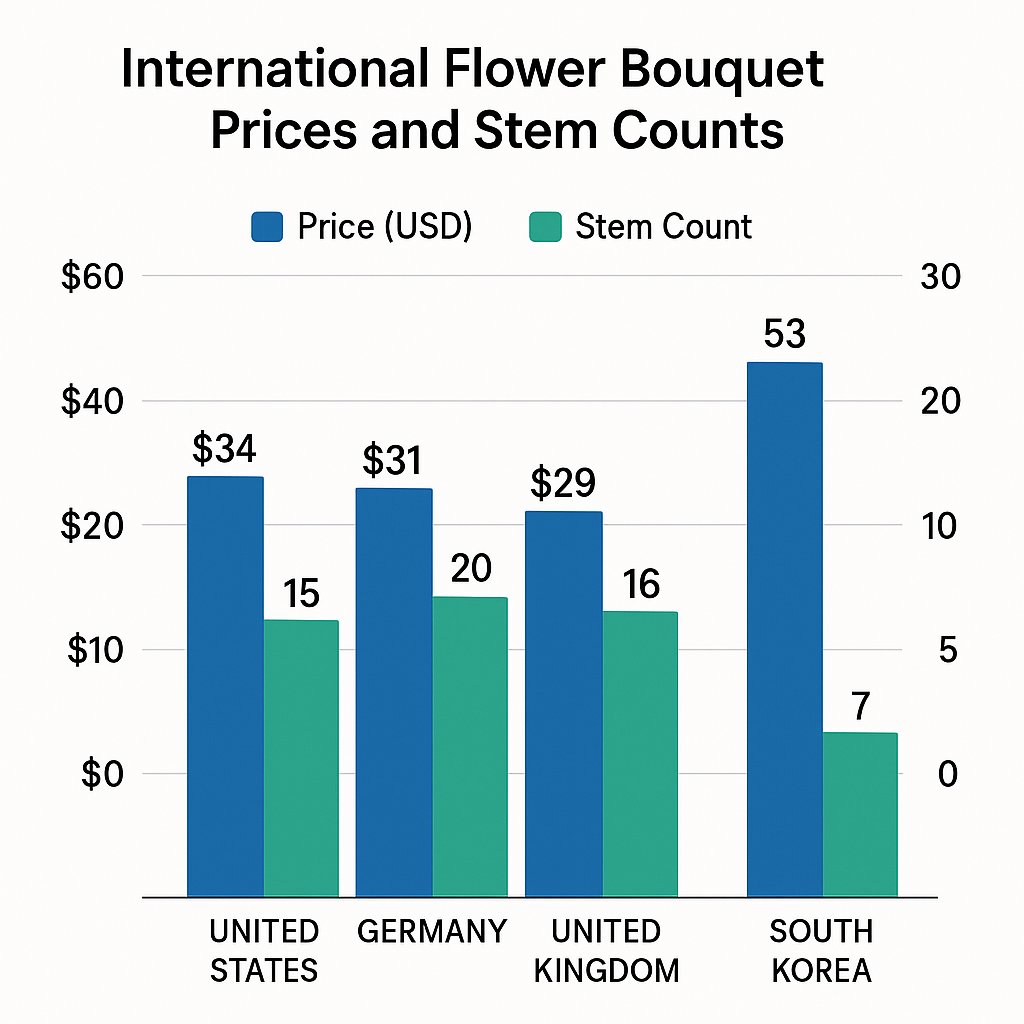
A $65 bouquet with dozen roses shipped from a boutique florist in Paris might actually cost less per stem than a $45 “value” arrangement padded with filler greenery. Always check what’s actually included – stem count, vase or no vase, and whether delivery is bundled into the quoted price or added separately at checkout.

comparison of international flower bouquet prices and stem counts

Consider timing flexibility over guaranteed same-day delivery

Same-day international delivery is almost always the priciest option, sometimes adding $15-25 to the base cost. If the occasion allows even a one-day buffer, standard delivery windows are notably cheaper across nearly every platform I’ve reviewed.

A quick comparison of common delivery approaches

Method Typical cost range Delivery speed
Global florist network $35-$70 Same day to 2 days
Courier-shipped boxed flowers $60-$150 2-5 days (customs risk)
Local florist direct contact $30-$60 Varies by country

Don’t skip the fine print on currency and fees

One thing that catches a lot of people off guard: the price you see at checkout in US dollars often includes a hidden currency conversion buffer of 3-5%. It’s not fraud – it’s just how cross-border pricing works – but it’s worth knowing before you compare two services side by side, since the “cheaper” one on the surface might have a worse exchange rate baked in.

When I’m looking for the most efficient and cheapest way to send flowers internationally, I usually start by checking whether the service has an established florist partner in the actual destination city, rather than a generic “we deliver worldwide” claim. That single detail tends to separate reasonable pricing from inflated one.

What I’d tell a friend before they hit “order”

Sending flowers abroad is one of those gestures that means more than its price tag suggests, but that doesn’t mean you need to overpay for the sentiment. Understanding how the local-florist model works, watching the destination country’s calendar instead of just your own, and reading the fine print on fees will get you most of the way to a fair price. The rest is just picking a bouquet that fits the moment. If you want to dig further into specific country-by-country delivery norms or seasonal pricing patterns, it’s worth spending twenty minutes researching before your next occasion rolls around – future you (and your recipient) will appreciate it.

The role of ethylene in flower wilting and senescence

Ever brought home a gorgeous bouquet only to watch it collapse within two days? You changed the water, trimmed the stems, kept it out of direct sunlight – and still, petals drooped and colors faded almost overnight. The invisible culprit behind that frustrating decline is often a tiny gaseous molecule called ethylene. It’s the same plant hormone that ripens bananas on your counter, and it’s quietly orchestrating the death of your flowers from the inside out.

Understanding how ethylene works doesn’t just satisfy curiosity – it gives you practical tools to extend the life of cut flowers, improve garden performance, and even appreciate the remarkable biology happening in a simple vase on your kitchen table.

What exactly is ethylene, and why should flower lovers care?

Ethylene (C₂H₄) is a naturally occurring plant hormone – technically, the simplest unsaturated hydrocarbon. Plants produce it themselves, but it also wafts in from ripening fruit, vehicle exhaust, cigarette smoke, and even decaying plant material. Concentrations as low as 10 parts per billion (ppb) can trigger visible changes in sensitive flowers. That’s roughly equivalent to a single drop of water in a 50,000-liter swimming pool.

Here’s where it gets interesting: not all flowers respond to ethylene the same way. Carnations, orchids, petunias, delphiniums, and sweet peas are notoriously ethylene-sensitive. Expose a fresh carnation to ethylene, and it may wilt within hours. Meanwhile, flowers like chrysanthemums, sunflowers, and bird of paradise show relatively low sensitivity and hold up well even in ethylene-rich environments.

comparison chart showing ethylene-sensitive versus ethylene-resistant flower species

The biochemical chain reaction: from gas to wilting petals

Flower senescence isn’t random deterioration – it’s a genetically programmed process, and ethylene acts as one of its primary triggers. Here’s a simplified walkthrough of what happens at the molecular level.

Step 1: biosynthesis – the flower makes its own poison

Ethylene production in petals begins with the amino acid methionine. Through a well-characterized pathway, methionine is converted to S-adenosyl-L-methionine (SAM), then to 1-aminocyclopropane-1-carboxylic acid (ACC) by the enzyme ACC synthase, and finally to ethylene by ACC oxidase. What makes this particularly devastating is the autocatalytic nature of the process: once a small amount of ethylene is produced, it stimulates the flower to produce even more. Researchers sometimes call this “the ethylene avalanche.”

In carnations, for example, ethylene production in aging petals can surge by 10- to 100-fold within just 24 hours once the cascade begins. The genes encoding ACC synthase (ACS) and ACC oxidase (ACO) are upregulated dramatically during this window – essentially, the flower switches on its own self-destruct program.

Step 2: signal perception – the receptors that listen

Ethylene doesn’t just float around – it binds to specific receptor proteins embedded in the endoplasmic reticulum membrane. In the model plant Arabidopsis, five ethylene receptors have been identified (ETR1, ETR2, ERS1, ERS2, and EIN4). When ethylene binds, it deactivates the receptors, which in turn deactivates a negative regulator called CTR1. This releases the downstream signaling component EIN2, eventually activating transcription factors like EIN3 and EIL1 that switch on senescence-associated genes.

The practical takeaway? This receptor system explains why compounds like 1-methylcyclopropene (1-MCP) work so well. 1-MCP competes with ethylene for binding sites on those receptors – essentially jamming the signal before the cascade starts.

Step 3: cellular breakdown – the visible decline

Once senescence genes are activated, a series of destructive events unfold in petal cells:

  • Membrane integrity collapses. Phospholipids in cell membranes are degraded by enzymes like phospholipase D, leading to ion leakage and loss of turgor pressure – that’s the wilting you see.
  • Proteins are dismantled. Proteases break down cellular proteins, and the amino acids are recycled back into the plant body – a nutrient-salvage operation.
  • Pigments degrade. Anthocyanins and carotenoids are broken down or modified, causing color fading, browning, or that translucent appearance you notice in aging petals.
  • Programmed cell death (PCD) initiates. DNA fragmentation occurs, vacuoles rupture, and cells essentially self-digest. In some species, this happens petal by petal in a remarkably orderly sequence.

diagram of ethylene biosynthesis pathway from methionine to petal wilting

Not every flower plays by ethylene’s rules

Here’s something most articles miss: a significant number of commercially important flowers follow ethylene-independent senescence pathways. Lilies, tulips, irises, and daffodils wilt and die without much involvement from ethylene at all. Their senescence is instead regulated by other hormones (like abscisic acid) and transcription factors – particularly members of the NAC gene family.

Recent research has identified NAC transcription factors as master regulators of petal senescence in these species. For instance, in Japanese morning glory (Ipomoea nil), a NAC gene called EPHEMERAL1 directly controls the timing of petal wilting, and silencing it extended flower lifespan significantly – without touching the ethylene pathway at all.

This distinction matters practically. If you’re dealing with a lily that’s fading, treating it with anti-ethylene compounds like silver thiosulfate (STS) or 1-MCP won’t help much. The flower is following a different script entirely.

Practical strategies to slow down ethylene-driven wilting

Now, the part most people want: what can you actually do? Whether you’re a home gardener, a florist, or just someone who hates tossing out $15 bouquets after three days, these approaches target ethylene directly.

For cut flowers at home

  • Keep fruit away from flowers. A bowl of ripening apples or bananas on the same counter as your vase is essentially gassing your flowers. Move them to separate rooms if possible.
  • Ventilate. Ethylene accumulates in enclosed, warm spaces. Even cracking a window near your arrangement helps dissipate the gas before it reaches damaging concentrations.
  • Remove dying blooms immediately. Wilting flowers produce exponentially more ethylene, accelerating the decline of their healthier neighbors. Don’t wait – pull them out as soon as they start drooping.
  • Choose wisely. If you want a bouquet that lasts, lean toward low-sensitivity species: chrysanthemums, statice, protea, zinnias, and sunflowers routinely outlast ethylene-sensitive varieties by days.
  • Keep things cool. Ethylene production roughly doubles with every 10 °C (18 °F) rise in temperature. A cooler room – or even placing flowers in the refrigerator overnight – meaningfully slows the process.

For florists and growers

Commercial floriculture relies heavily on two chemical interventions:

  • Silver thiosulfate (STS): A pulse treatment applied at the farm or wholesale level. STS blocks ethylene receptors, extending vase life by 2–5 days in sensitive species like carnations and roses. However, silver is a heavy metal with environmental disposal concerns, which has driven the industry toward alternatives.
  • 1-Methylcyclopropene (1-MCP): A gaseous treatment applied in enclosed chambers. It binds irreversibly to ethylene receptors, providing longer-lasting protection than STS in many species. It’s already widely used for apple storage and is gaining traction in floriculture.

Beyond chemistry, cold chain management remains the single most impactful practice. The U.S. floral industry loses an estimated $400 million annually to postharvest waste – and a significant portion of that traces back to ethylene exposure during shipping, particularly when flowers share trucks with produce.

The bigger picture: why flowers are programmed to die

It’s easy to see senescence as a flaw, but from the plant’s perspective, it’s a feature. Once pollination occurs, petals become metabolically expensive to maintain. By dismantling them in an orderly way, the plant recycles nitrogen, phosphorus, and other nutrients into developing seeds and fruits. Ethylene often surges right after pollination – a signal that essentially says, “job done, shut down the display.”

This is why pollinated flowers wilt faster than unpollinated ones. In some orchid species, just placing pollen on the stigma triggers a measurable ethylene burst within hours. It’s elegant – and ruthlessly efficient.

side-by-side photo of fresh and senescent carnation petals showing color and turgor changes

Where the science is heading

Genetic modification offers intriguing possibilities. Researchers have already created transgenic carnations and petunias with silenced ACS or ACO genes, and these modified flowers lasted significantly longer than their conventional counterparts. In one study, transgenic carnations showed a vase life of 14–16 days compared to 6–8 days for unmodified flowers.

The challenge? Consumer acceptance remains mixed, especially in the U.S. and Europe, where GMO labeling debates extend into ornamental plants. CRISPR-based gene editing – which can achieve similar results without introducing foreign DNA – may offer a more publicly palatable path forward, though regulatory frameworks are still evolving as of 2026.

Meanwhile, breeding programs at institutions like Wageningen University and various Japanese research institutes are working to develop naturally long-lived varieties by selecting for low ethylene sensitivity. It’s slower than genetic modification, but it sidesteps the regulatory and public perception hurdles.

Key takeaways worth remembering

Ethylene is a natural, gaseous hormone that accelerates flower senescence through an autocatalytic biosynthetic pathway and a well-defined receptor signaling cascade. But not all flowers depend on ethylene to senesce – some follow entirely separate molecular programs. Understanding which category your flowers fall into determines which preservation strategies will actually work.

For most people, the simplest wins are environmental: keep flowers cool, separate them from fruit, remove fading blooms promptly, and ventilate the space. For professionals, STS and 1-MCP treatments remain the gold standard, though cold chain discipline arguably matters more.

If the intersection of plant biology, gardening, and everyday science fascinates you, exploring deeper resources on the topic can open up a whole new appreciation for the processes happening quietly in your garden and on your windowsill. The next time a flower wilts, you’ll know exactly what’s going on – and possibly how to buy it a few more days.

The secret life of roots: what happens beneath the soil

Imagine a single rye plant. Nothing special – just an ordinary grass growing in a pot of soil. In 1937, botanist Howard Dittmer carefully washed the roots of one such plant and counted them. The total? Roughly 14 billion root hairs, stretching across a combined length of over 6,000 miles. That’s enough to reach from New York to Tokyo and back.

We spend so much time admiring what grows above ground – the flowers, the fruit, the towering canopy – that we forget the real engine of plant life is working in total darkness, right beneath our feet. Roots don’t just anchor a plant. They negotiate, communicate, fight, and form alliances in ways that would rival any political drama.

Here’s what’s actually going on down there.

More than an anchor – how roots navigate their world

Most of us learned in school that roots grow downward because of gravity. That’s true, but it barely scratches the surface. Root tips contain specialized cells called statocytes that function like tiny gyroscopes, sensing gravitational pull and directing growth accordingly. But gravity is just one signal in an overwhelming flood of information.

Roots can detect moisture gradients and grow toward water sources – a behavior called hydrotropism. They sense patches of nutrient-rich soil and proliferate root hairs in those zones while essentially ignoring barren areas. They even respond to touch. When a root tip encounters a rock or compacted clay, it redirects itself around the obstacle, sometimes within hours.

What surprised researchers most in recent decades is that roots appear to “choose” their path. A 2012 study published in PLOS ONE showed that corn roots can distinguish between a nutrient-rich patch and an inert object of the same density. They don’t just blunder forward – they evaluate.

Cross-section diagram showing a root tip with labeled root cap, root hairs, and zone of elongation against a dark soil background

The rhizosphere – a bustling metropolis you can’t see

The rhizosphere is the narrow zone of soil immediately surrounding a root, and it might be the most ecologically dense habitat on the planet. In a single teaspoon of healthy rhizosphere soil, you can find more microorganisms than there are people on Earth – bacteria, fungi, protozoa, nematodes, and archaea all jostling for position.

But this isn’t chaos. It’s commerce.

The carbon-for-nutrients trade

Plants photosynthesize. Soil microbes don’t. So roots leak sugars, amino acids, and organic acids into the rhizosphere – sometimes investing 20 to 40 percent of all photosynthesized carbon into these root exudates. In return, bacteria and fungi break down minerals locked in soil particles and deliver them in plant-available forms. Phosphorus, iron, zinc – nutrients that a root alone could never access – flow to the plant through this underground economy.

Think of it like a farmers’ market operating 24/7, where the currency is carbon and the goods are minerals.

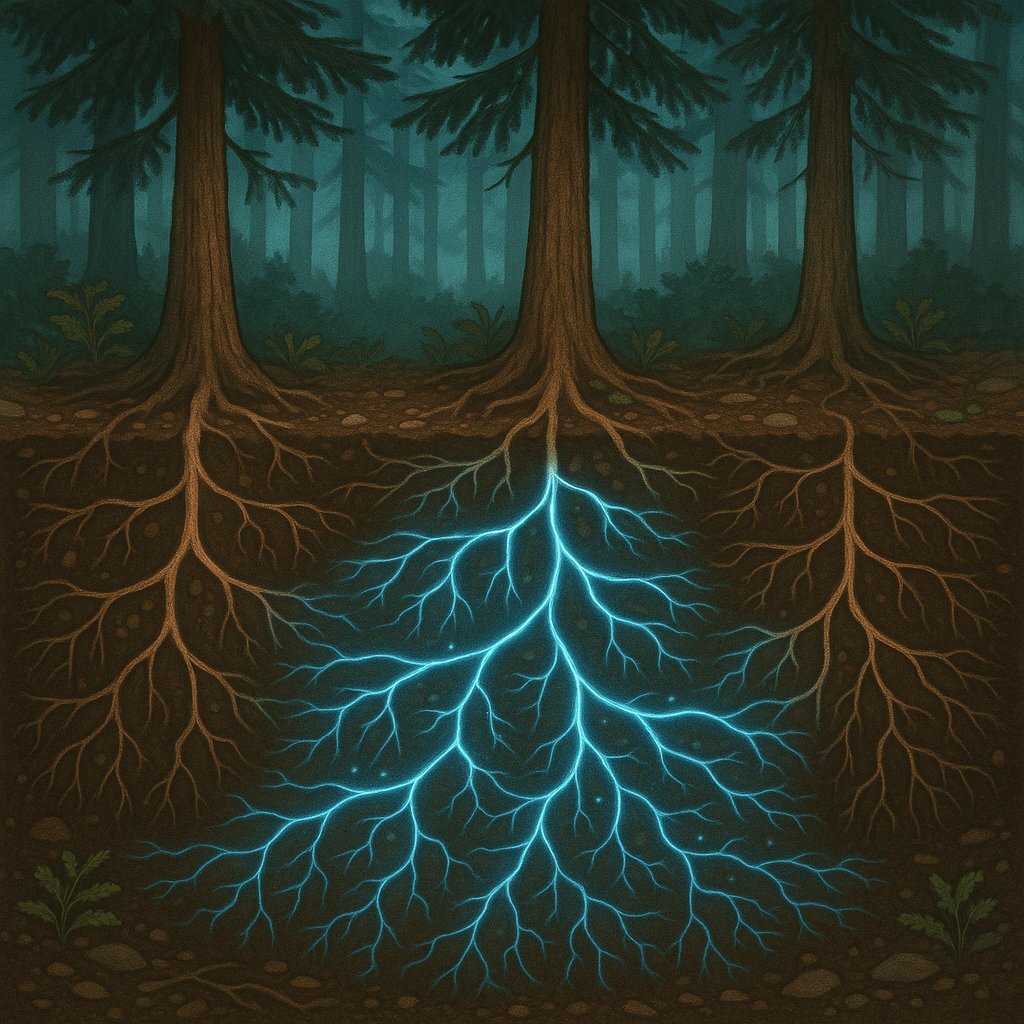
Mycorrhizal networks – the “Wood Wide Web”

Most people have heard of mycorrhizal fungi by now, but the scale of their work is still staggering. About 90% of land plant species form partnerships with these fungi. The fungal threads – called hyphae – extend far beyond the root’s own reach, effectively multiplying a plant’s absorptive surface area by 100 to 1,000 times.

Here’s the part many articles skip: mycorrhizal networks connect multiple plants simultaneously. A mature Douglas fir in a Pacific Northwest forest can be linked to dozens of neighboring trees through shared fungal pathways. Research by ecologist Suzanne Simard at the University of British Columbia has shown that carbon, water, and even chemical warning signals travel between trees through these connections. Older “mother trees” appear to funnel resources to younger seedlings, particularly their own offspring.

This isn’t metaphor. It’s measurable nutrient transfer, tracked with isotopic labeling in controlled studies.

Illustration of a mycorrhizal fungal network with glowing hyphae threads connecting multiple plant root systems beneath a forest floor

How roots defend themselves – and call for backup

Roots are not passive victims of soil pathogens. They mount sophisticated defenses that researchers are only beginning to understand.

When a pathogenic fungus attacks, roots can:

  • Release antimicrobial compounds called phytoalexins directly into the surrounding soil
  • Recruit beneficial bacteria by altering the chemical composition of their exudates – essentially sending out a distress signal
  • Thicken cell walls at the point of infection to create physical barriers
  • Communicate the threat to neighboring roots (their own and sometimes other plants’) through chemical and electrical signals

A fascinating 2018 study in Science found that when tomato plants were attacked by a soil-borne pathogen, the composition of their root exudates shifted dramatically – attracting Bacillus bacteria that produce antibiotics effective against the specific attacker. The plant wasn’t just defending itself. It was recruiting mercenaries.

Nitrogen fixation – a partnership worth billions

Legumes – beans, peas, clover, alfalfa – have struck perhaps the most valuable deal in agriculture. Their roots form nodules that house Rhizobium bacteria, which convert atmospheric nitrogen (N₂) into ammonia the plant can use. This single biological process contributes an estimated 40 to 60 million metric tons of nitrogen to agricultural soils worldwide each year, saving farmers billions of dollars in synthetic fertilizer costs.

But the relationship isn’t automatic. The chemical handshake between legume roots and rhizobia involves a precise exchange of molecular signals – flavonoids from the root, Nod factors from the bacteria – and if the signals don’t match, the partnership simply doesn’t form. Each legume species recognizes only specific rhizobial strains, like a lock and key.

What damages this underground ecosystem?

Most competing articles mention tillage and chemical inputs in passing, but the mechanisms deserve a closer look.

Excessive tillage physically shreds mycorrhizal networks. Those fungal hyphae are thinner than human hair, and a single pass with a rototiller can destroy months of fungal growth. The network rebuilds, but slowly – and annual tilling never lets it reach full maturity.

High-phosphorus fertilization paradoxically suppresses mycorrhizal colonization. When phosphorus is abundant and easily accessible, plants stop investing carbon in their fungal partners. The fungi decline, and with them goes the plant’s extended nutrient-gathering network and disease resistance. It’s a classic case of short-term gain creating long-term vulnerability.

Soil compaction from heavy machinery limits root exploration. Roots in compacted soil grow shallower, are more vulnerable to drought, and access a smaller volume of nutrients. Interestingly, even roots in non-compacted soil grow differently in clay versus sandy loam – not because clay is “bad” soil, but because oxygen diffusion rates and mechanical resistance differ, and roots adapt their architecture accordingly.

Monoculture reduces the diversity of root exudates entering the soil, which in turn reduces microbial diversity. A field that grows the same crop year after year develops a less varied, less resilient soil microbiome. Cover cropping and crop rotation – practices central to regenerative agriculture – work partly because they introduce diverse root chemistries into the soil, feeding a broader range of beneficial organisms.

Side-by-side comparison showing a dense healthy root system in rich dark soil on the left versus a stunted shallow root system in pale compacted degraded soil on the right

What gardeners and growers can actually do

Understanding root biology isn’t just academic. It translates into practical choices that make a real difference, whether you’re managing a backyard garden bed or a 500-acre farm.

  1. Minimize soil disturbance. No-till or reduced-till practices preserve mycorrhizal networks and soil structure. If you must dig, do it selectively – transplanting holes rather than full-bed tilling.
  2. Feed the soil, not just the plant. Compost, mulch, and cover crops provide the carbon that root-associated microbes need to thrive. A diverse microbial community feeds roots more effectively than any single fertilizer.
  3. Plant diversity matters. Interplanting, polycultures, and diverse cover crop mixes create a richer rhizosphere. Each plant species attracts a slightly different microbial community, and together they build a more robust underground ecosystem.
  4. Water deeply and less often. Shallow, frequent watering encourages shallow root growth. Deeper, less frequent irrigation trains roots to explore lower soil horizons, making plants more drought-resilient.
  5. Stop fearing fungi. That white fuzz on your mulch? Probably beneficial saprophytic fungi breaking down organic matter. The mushrooms popping up in your garden beds? Often a sign of healthy soil biology, not disease.

Roots are rewriting what we know about plants

For centuries, we treated the soil as a static medium – just dirt that holds plants upright while fertilizer provides the food. That view is crumbling under the weight of evidence from soil science, molecular biology, and ecology. Roots are active participants in a living system of extraordinary complexity, making decisions, forming relationships, and shaping the very soil they inhabit.

Every time you step on earth, you’re walking over a network that took millions of years to evolve and can be damaged in a single afternoon with a plow. That’s worth pausing over.

If the hidden intelligence of plants fascinates you as much as it does me, keep exploring. The language of roots – chemical, electrical, fungal – is one of those subjects where every answer opens ten new questions. For more thought-provoking perspectives on topics that sit at the intersection of nature, language, and learning, Learn to Love Your Words offers a refreshing space to dig deeper into the ideas that shape how we understand our world.