Flowers arrive without you, so the card has to carry your voice. Writing a flower card for someone you cannot visit takes a few minutes of planning, and a message built on a real detail reads very differently from a line copied off a list. This guide covers how to match the message to the occasion, use one specific memory, adapt short examples, and sign so the recipient knows who sent the bouquet.
Writing a flower card starts with the relationship and the occasion
Before you pick any words, name two things: who this person is to you, and why the flowers are going out. A birthday note to a grandmother sounds different from a note to a coworker recovering from surgery. A manager or client usually calls for complete sentences and a plain closing. A close friend can get a joke.
Enclosure cards are small, so plan on two to four sentences. Each occasion has its own job for those sentences:
- Birthday or anniversary: a warm wish and one personal detail.
- Get well: kindness with no pressure. Skip questions about the illness and do not ask for a reply.
- Sympathy: keep it short. Use the name of the person who died if you knew them. Leave out religious language unless you know the family shares it.
- Congratulations: name the actual achievement, such as the promotion, the new home, or the baby.
- Thank you: say what the person did and what it made possible for you.
Use one specific memory
A single concrete detail does more than a paragraph of general affection. Think of a place, an object, or something the person once said to you. “I still think about the lemon cake you brought to my first day at the new office” tells the recipient you remember them, and it takes one sentence.
Keep the memory small and safe to read in front of others. Cards often sit on a counter or desk where visitors can see them, so an inside joke or a private story may not suit the setting. For sympathy cards, one warm sentence about the person who died is enough. If nothing comes to mind, write about something you admire in the recipient now, like how they handle hard weeks or how they make people laugh.
Because you are away, you can mention it in a clause. “I wish I could hand these to you myself” does the job. Avoid long apologies for missing the event, since they shift the attention to you.
Short message examples you can adapt
Treat these as starting frames. Replace the details with your own so the card sounds like you.
- Birthday: “Happy birthday, Dana. I wish I could be at the table with you. Hope the day includes cake and a long nap.”
- Get well: “Thinking of you this week. No need to reply. Just rest, and let the flowers do the visiting.”
- Sympathy: “I am so sorry about your father. I remember how he waved at everyone from his porch. Thinking of you and your family.”
- Congratulations: “Congratulations on the new job, Marcus. You earned it, and I am cheering from far away.”
- Thank you: “Thank you for driving me to the airport at five in the morning. I would have missed my flight without you.”
- Anniversary: “Happy anniversary to two people who make everyone around them feel welcome. Wishing I were there to celebrate.”
Read your draft out loud once. If a sentence sounds like something you would never say to the person, rewrite it in plain speech.
Matching the card to the arrangement
The flowers and the words should feel like they belong together. A bright mixed bouquet suits a cheerful birthday line, while a soft white arrangement fits a quieter message. Comparing options on a catalog page, such as the one where you can send flowers to Atlanta, lets you see the styles side by side before you settle on the tone of the note.
Check the recipient’s details while you are at it. Confirm the spelling of the name, the right address, and whether the person will be home. For a hospital, office, or apartment building, a quick message to the recipient or a family member can tell you if deliveries are accepted at the front desk. Rules differ from place to place, so ask rather than assume.
Signing clearly
A clear signature helps the recipient identify the sender when you are not there. Use the name the recipient knows you by. If you share a first name with others in their circle, add your last name or your relationship, such as “Love, Jen (your neighbor from Maple Street).”
For a group gift, list the names or write a short label like “Your friends at the Tuesday book club.” Do not rely on “from all of us” alone, because the recipient may have to guess who is included. If the shop types the message for you, spell each name as you want it printed and keep the closing short, since order forms often limit the number of characters.
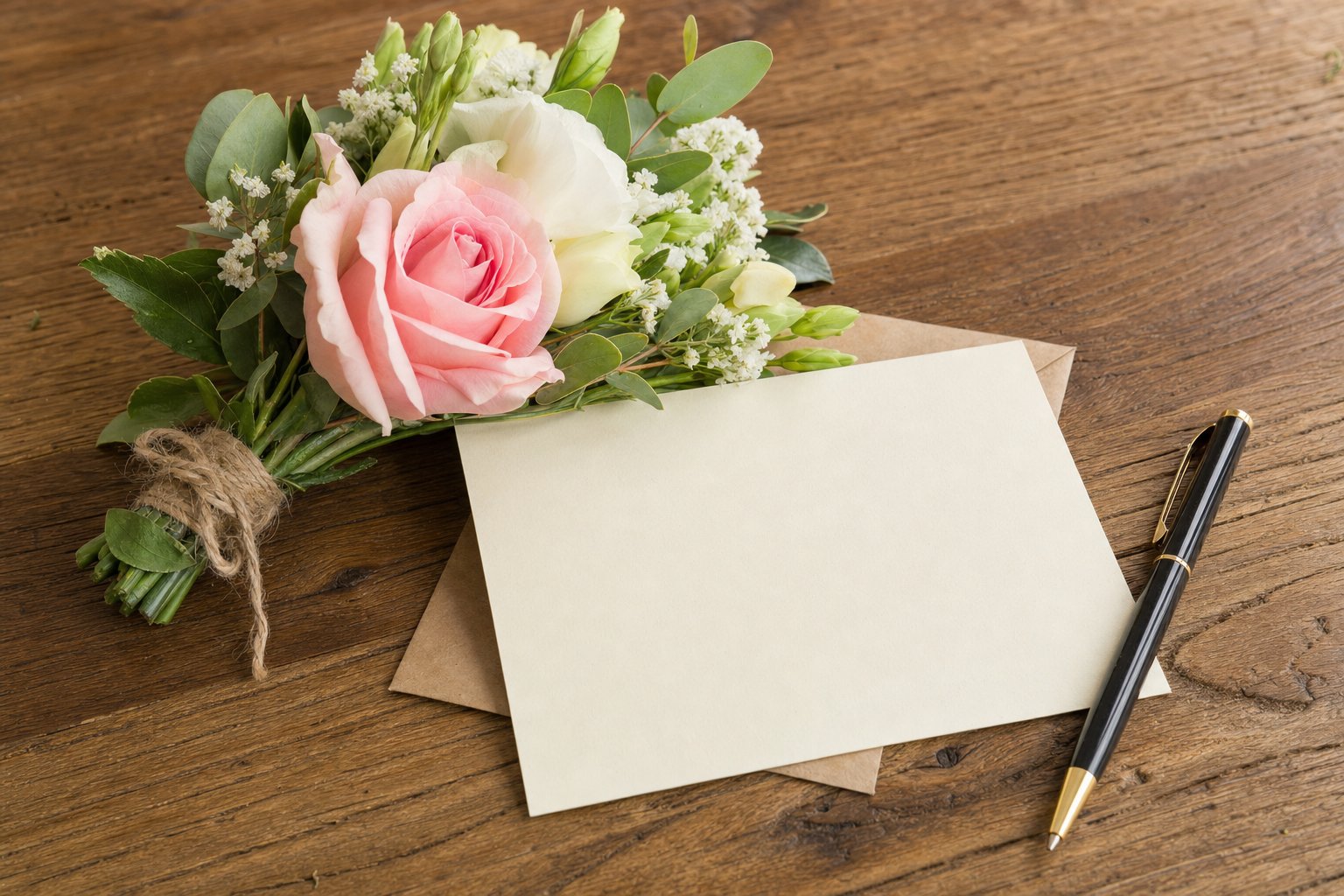
If you are writing by hand, print your name in clear block letters. Choose a pen that will not smear, and leave a little margin so nothing is cut off by the card edge.
Before you place the order, write the full message in a notes app, read it aloud, and check the spelling of every name. Then copy the final version into the order form or onto the card.